
What is a public defender, and how do you know whether you qualify for one if you are facing criminal charges in Minnesota? A public defender is a licensed attorney employed by the state to provide free legal representation to people accused of crimes who cannot afford to hire a private lawyer. This right comes from the Sixth Amendment to the U.S. Constitution and the landmark Supreme Court case Gideon v. Wainwright, and in Minnesota it is administered by the Board of Public Defense under Minn. Stat. Chapter 611. Public defenders handle a huge share of the criminal cases in Hennepin County, Ramsey County, and across the state, representing clients in everything from misdemeanors to the most serious felonies. Understanding how the public defender system works, who qualifies, and what its limits are is essential for anyone navigating the Minnesota criminal justice system. This guide covers five things every Minnesotan should know about public defenders.
- What public defenders are: The constitutional right to counsel and how Minnesota provides it.
- Who qualifies and how: The income rules and appointment process for a Minnesota public defender.
- The limits to know: Caseloads, what public defenders cannot do, and when private counsel helps.
Understanding the Role of a Public Defender
A public defender is a fully licensed criminal defense attorney, just like a private lawyer, but paid by the state to represent people who cannot afford their own attorney. The right to a public defender is one of the most important protections in the American legal system.
Where Does the Right to a Public Defender Come From?
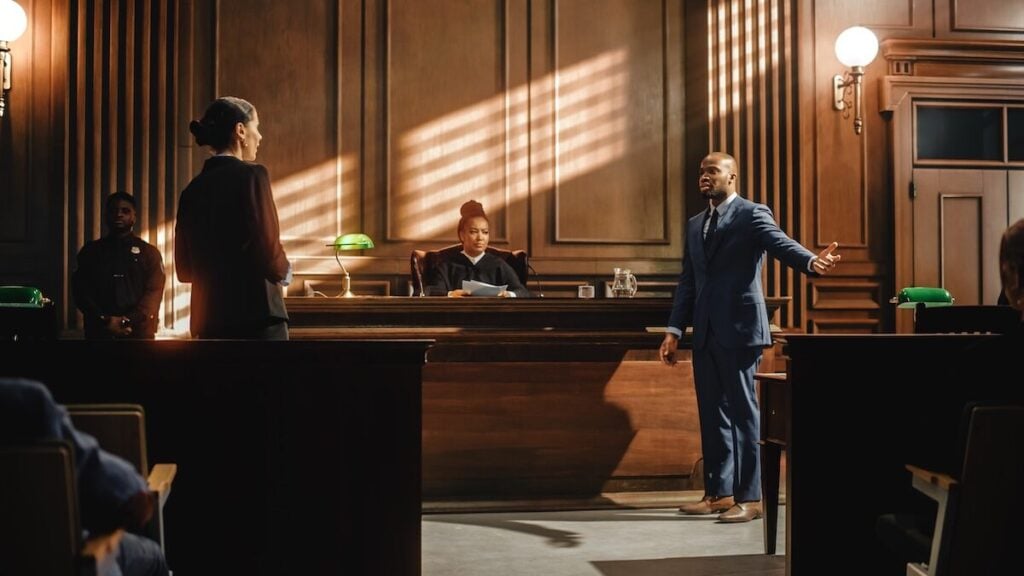
The right to a public defender comes from the Sixth Amendment to the U.S. Constitution, which guarantees the right to counsel in criminal prosecutions. In 1963, the U.S. Supreme Court decided Gideon v. Wainwright, which held that states must provide attorneys to criminal defendants who cannot afford one. Minnesota codified this right in Minn. Stat. Chapter 611, which created the Board of Public Defense and established the system of district public defenders across the state. The right applies in any case where a person faces the possibility of incarceration, including felonies, gross misdemeanors, and misdemeanors punishable by jail time. It also extends to juvenile delinquency cases and certain other proceedings.
- Sixth Amendment: The U.S. Constitution guarantees the right to counsel in criminal cases.
- Gideon v. Wainwright: The 1963 Supreme Court case requiring states to provide attorneys.
- Minnesota Chapter 611: State law establishing the Board of Public Defense and the system.
- When it applies: Any case with possible jail time, including juvenile cases.
Are Public Defenders Real Lawyers?
Yes, public defenders are fully licensed attorneys who have graduated from law school, passed the bar exam, and are admitted to practice law in Minnesota, exactly like private defense attorneys. Many public defenders are highly experienced criminal law specialists who have handled thousands of cases and know the local courts, judges, and prosecutors intimately. The common perception that public defenders are somehow “lesser” lawyers is a myth; many are extremely skilled trial attorneys. The main difference is not competence but resources: public defenders carry very heavy caseloads and have less time and fewer investigative resources to devote to each individual case compared to a private attorney with a smaller client load.
- Fully licensed: Public defenders have the same qualifications as private attorneys.
- Often highly experienced: Many are seasoned criminal law specialists.
- Myth of lesser quality: Public defenders are frequently skilled trial lawyers.
- The real difference: Caseload and resources, not legal ability.
5 Things Every Minnesotan Should Know About Public Defenders
The five points below cover the most important things to understand about the public defender system in Minnesota. Each one addresses a common question or misconception.
1. You Have to Qualify Financially
Not everyone who wants a public defender can get one. Minnesota law requires that defendants demonstrate they are financially unable to afford private counsel before a public defender will be appointed. Under Minn. Stat. § 611.17, a defendant qualifies automatically if they or a household dependent receives means-tested government benefits (like SNAP, Medical Assistance, or MFIP), or if their income and assets would leave them unable to pay the reasonable cost of private counsel for their case. The court conducts a financial inquiry, and the burden is on the defendant to prove they qualify. People who refuse to provide financial information or who can afford private counsel but refuse to hire one will not be appointed a public defender.
According to the Minnesota Office of the Revisor of Statutes, Minn. Stat. § 611.17 establishes that “the burden is on the accused to show that the accused is financially unable to afford counsel,” and that “defendants who fail to provide information necessary to determine eligibility shall be deemed ineligible,” confirming that financial qualification is a mandatory threshold for receiving a Minnesota public defender.
- Means-tested benefits: Receiving SNAP, Medical Assistance, or MFIP qualifies you automatically.
- Income and assets: The court reviews whether you can afford private counsel.
- Burden on defendant: You must prove you cannot afford a lawyer.
- Refusal means ineligible: Failing to provide financial info results in denial.
2. You Do Not Choose Your Public Defender
Unlike hiring a private attorney, you do not get to pick which public defender represents you. When the court determines you qualify, it appoints the district public defender’s office, and the office assigns an attorney to your case based on availability and caseload. You cannot request a specific public defender, and if you do not get along with the one assigned, switching is difficult and generally requires showing a genuine conflict rather than just a personality difference. This lack of choice is one of the key differences between public defenders and private attorneys. With a private attorney, you select the specific lawyer you want based on their experience, reputation, and your comfort level with them.
- No choice of attorney: The office assigns a lawyer; you cannot pick.
- Based on availability: Assignments depend on caseload and scheduling.
- Switching is hard: Changing public defenders requires more than a personality clash.
- Contrast with private counsel: With a private lawyer, you choose who represents you.
3. Public Defenders Carry Heavy Caseloads
One of the most important things to understand about public defenders is that they handle an enormous number of cases at once. Minnesota public defenders are frequently assigned caseloads that far exceed the recommended national standards, sometimes juggling dozens or even hundreds of open cases simultaneously. This heavy workload means a public defender may have limited time to spend on any single case, less availability to meet with clients, and fewer resources for investigation and expert witnesses. It does not mean they are bad lawyers; it means the system is underfunded and overburdened. For defendants, this can translate into less individual attention, longer waits for communication, and more pressure toward quick plea deals simply because of time constraints.
- Overloaded dockets: Public defenders often carry far more cases than recommended.
- Limited time per case: Heavy caseloads reduce time for each client.
- Fewer resources: Less funding for investigators and expert witnesses.
- System problem: The issue is underfunding, not attorney ability.
4. There Are Costs and Co-Payments Involved
Although public defenders provide representation at little to no upfront cost, the system is not always entirely free. Minnesota law allows courts to impose a co-payment for public defender services, and defendants may be required to reimburse some of the cost of their representation depending on their financial circumstances. Additionally, if the court later determines that a defendant had the ability to pay but received a public defender anyway, it can order reimbursement. These costs are generally far lower than hiring a private attorney, but defendants should understand that “free” representation may still come with some financial obligations. The specific amounts and rules vary, and the court makes these determinations based on the defendant’s financial situation.
- Possible co-payment: Courts can require a co-pay for public defender services.
- Reimbursement: Defendants may have to repay part of the cost.
- Ability to pay: Later findings of ability to pay can trigger repayment orders.
- Still cheaper: Costs are far lower than hiring private counsel.
5. You Can Hire a Private Attorney Instead
Qualifying for a public defender does not mean you are required to use one. Any defendant has the right to hire a private criminal defense attorney instead, and many people choose to do so even when they qualify for a public defender, especially in serious cases where the stakes are high. A private attorney typically offers more individual attention, more time per case, greater availability for communication, and more resources for investigation and expert witnesses. For people facing felonies, DWIs, drug charges, or any case that could result in significant prison time or lasting consequences, the additional time and resources a private attorney provides can make a meaningful difference. The choice between a public defender and private counsel depends on your financial situation and the seriousness of your case.
- Right to choose: You can hire private counsel even if you qualify for a public defender.
- More attention: Private attorneys typically devote more time to each case.
- Better resources: More funding for investigation and experts.
- High-stakes cases: Private counsel often makes sense for serious charges.

How to Decide Between a Public Defender and Private Counsel
Choosing between a public defender and a private attorney is one of the first important decisions a person facing criminal charges in Minnesota must make. Understanding the trade-offs helps you make the right choice for your situation.
When Does a Public Defender Make Sense?
A public defender makes sense when you genuinely cannot afford private counsel and you qualify financially under Minnesota law. Public defenders are a vital and constitutionally guaranteed resource, and for many people they are the only realistic option. They are experienced, knowledgeable about local courts, and fully capable of providing effective representation. If your case is relatively straightforward, if the potential penalties are lower, or if you simply do not have the financial means to hire a private attorney, a public defender provides real and meaningful protection of your rights. The important thing is to be honest in the financial inquiry and to work cooperatively with whatever attorney is assigned to your case.
- When you qualify: Public defenders serve those who cannot afford private counsel.
- Constitutional right: This is a guaranteed protection, not charity.
- Capable representation: Public defenders provide effective, experienced defense.
- Cooperate fully: Working well with your assigned attorney improves outcomes.
When Should You Consider Hiring Private Counsel?
You should consider hiring a private attorney when the stakes are high and you have the financial means, even modestly, to do so. Serious felonies, DWI charges, drug trafficking cases, domestic violence allegations, and any case that threatens significant prison time, your career, your immigration status, or your professional license often warrant the additional time and resources a private attorney can provide. Private attorneys can begin working on your case immediately, often before charges are even filed, and can devote focused attention to investigation, motion practice, and negotiation. For many people facing life-altering charges, the investment in private counsel is worthwhile because the difference in available time and resources can affect the outcome.
- High-stakes cases: Serious charges often warrant private representation.
- Early intervention: Private attorneys can start before charges are filed.
- Focused attention: More time for investigation and negotiation.
- Worthwhile investment: The resource difference can affect the outcome.
Frequently Asked Questions
How do I qualify for a public defender in Minnesota?
You qualify if you cannot afford private counsel. Under Minn. Stat. § 611.17, you automatically qualify if you or a household dependent receives means-tested benefits like SNAP, Medical Assistance, or MFIP. Otherwise, the court reviews your income and assets to determine whether you can afford a private attorney. The burden is on you to prove you qualify.
Are public defenders free in Minnesota?
Mostly, but not always entirely. Public defenders provide representation at little to no upfront cost, but Minnesota courts can impose co-payments and may order partial reimbursement based on your financial circumstances. These costs are far lower than hiring a private attorney, but “free” representation can still come with some financial obligations.
Can I switch public defenders if I do not like mine?
It is difficult. You do not choose your public defender, and switching generally requires showing a genuine conflict of interest rather than just a personality difference or disagreement about strategy. If you have serious concerns, you can raise them with the court, but courts rarely reassign public defenders without a strong reason.
Is a private attorney better than a public defender?
Not necessarily in terms of legal skill, since many public defenders are excellent attorneys. The main difference is resources and time. Private attorneys typically handle fewer cases, allowing more individual attention, faster communication, and more investigation. For serious or high-stakes cases, this difference can matter significantly.
Can I hire a private attorney after starting with a public defender?
Yes. You can switch from a public defender to a private attorney at any point in your case. Many people start with a public defender and later hire private counsel, especially as they understand the seriousness of their charges. The sooner you make the switch, the more a private attorney can do for your case.
Do public defenders handle serious felony cases in Minnesota?
Yes. Public defenders handle the full range of criminal cases in Minnesota, from misdemeanors to the most serious felonies, including murder. Many public defenders are highly experienced in serious cases. However, their heavy caseloads mean they have less time per case than a private attorney would typically devote.

Make the Right Choice With The Law Offices of Josh Johnson
Deciding how to defend yourself against criminal charges is one of the most important decisions you will ever make, and understanding the difference between a public defender and private counsel is the first step toward protecting your future. The Law Offices of Josh Johnson provides dedicated private criminal defense representation across Hennepin, Ramsey, Dakota, Anoka, and Washington counties, offering the focused attention, investigative resources, and immediate action that heavy public defender caseloads often cannot provide. Josh Johnson personally handles each client’s case, begins working on the defense right away, and devotes the time and resources needed to challenge the prosecution’s evidence at every stage. If you are facing criminal charges in the Twin Cities area and want to understand your options, including whether private representation is right for your situation, contact The Law Offices of Josh Johnson today for a free, confidential consultation and find out how a dedicated defense can make a difference in your case.
