
New Minnesota laws 2026 brought a wave of significant changes to the state’s criminal code, most of which took effect on August 1, 2026, after passing during the 2026 legislative session. These changes create new felony offenses, increase penalties for existing crimes, expand law enforcement authority, and add new protections for crime victims across Minnesota. Several were passed in direct response to high-profile events, including the June 2025 attack on state lawmakers, and reflect a broad bipartisan push on public safety. Whether you are a Minnesota resident trying to stay informed, someone facing charges under one of these new laws, or simply want to understand how the criminal landscape has shifted, knowing these updates matters. This guide breaks down the seven most important new Minnesota criminal laws for 2026 and what each one means for people in Hennepin County, Ramsey County, and across the Twin Cities.
- What changed and when: The seven biggest criminal law updates that took effect in 2026.
- New crimes and penalties: How these laws create new felonies and increase existing penalties.
- What it means for you: How the changes affect defendants, victims, and everyday Minnesotans.
Why Minnesota Passed New Criminal Laws in 2026
The 2026 legislative session produced a substantial package of public safety and criminal justice changes, most effective August 1, 2026. Several were responses to specific events, while others reflected ongoing efforts to modernize Minnesota law around technology, fraud, and victim rights.
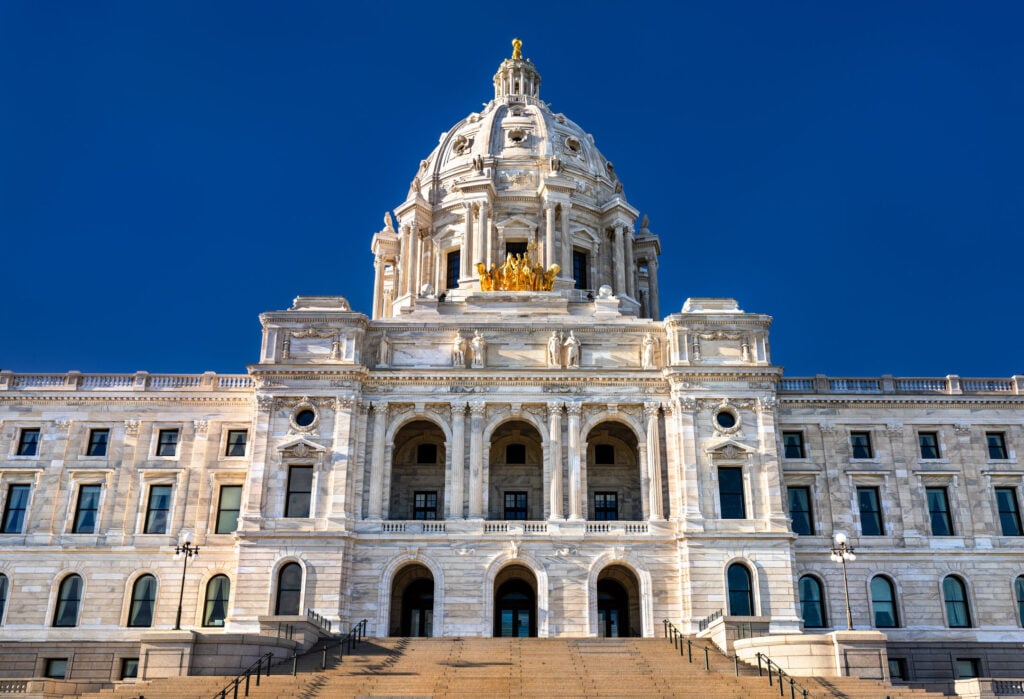
What Drove the 2026 Criminal Law Changes?
The 2026 changes came from several directions at once. Some, like the increased penalties for impersonating a peace officer, were passed in direct response to the June 2025 attack on Minnesota lawmakers, where the perpetrator posed as police. Others addressed emerging technology, like the ban on nudification technology and the addition of “forged digital likeness” to identity theft laws. Still others focused on fraud prevention, victim rights, and domestic violence response. The result is one of the more consequential years for Minnesota criminal law in recent memory, with new felonies, enhanced penalties, and expanded enforcement tools all taking effect at once.
- Response to events: Some laws followed the 2025 attack on state lawmakers.
- New technology: Laws addressed AI nudification and digital likeness crimes.
- Fraud focus: Several changes targeted financial crimes and fraud.
- Broad scope: The 2026 session touched many areas of criminal law at once.
When Did the New Laws Take Effect?
Most of the 2026 criminal law changes took effect August 1, 2026, which is the traditional effective date for Minnesota public safety and criminal legislation. A smaller set of provisions took effect July 1, 2026, and some reporting requirements phase in later, such as a Bureau of Criminal Apprehension domestic violence reporting mandate beginning in 2028. The laws generally apply to crimes committed on or after their effective dates, meaning conduct before August 1, 2026 is still governed by the old rules. This timing matters for anyone whose case straddles the effective date, and it is one reason consulting a defense attorney about which version of the law applies is important.
- August 1, 2026: The main effective date for most criminal law changes.
- July 1, 2026: A smaller set of provisions took effect earlier.
- Later phase-ins: Some reporting requirements begin in 2027 or 2028.
- Conduct-based: The laws apply to crimes committed on or after their effective dates.
7 New Minnesota Criminal Laws for 2026
The seven changes below represent the most significant new criminal laws Minnesotans should know about for 2026. Each one creates a new offense, increases penalties, or changes how the criminal justice system operates.
1. Grooming a Minor Is Now a Felony
Beginning August 1, 2026, grooming a minor became a standalone felony offense in Minnesota. Under the new law, grooming occurs when a person 18 or older expresses the desire or intent to engage in sexual conduct with a child and engages in a deliberate pattern of conduct to methodically develop a false, trusting relationship with the child intended to manipulate the child into future sexual conduct. Critically, the offense applies regardless of whether any sexual conduct actually occurs; it targets the manipulative pattern of behavior itself. The crime is a felony punishable by up to five years in prison and a $10,000 fine, with additional provisions for people in positions of authority and those who work for or provide services to schools.
According to the Minnesota House of Representatives Public Information Services, beginning August 1, 2026, grooming a minor is a felony that applies when a person engages in “a deliberate pattern of conduct to methodically develop a false trusting relationship with the child that is intended to strategically manipulate the child to engage in sexual conduct with the person at a future time, regardless of whether any sexual conduct occurs”.
- New felony: Grooming a minor is now a standalone felony offense.
- No sexual conduct required: The offense targets the grooming pattern itself.
- Penalty: Up to five years in prison and a $10,000 fine.
- Authority provisions: Extra provisions apply to people in positions of authority and school workers.
2. Impersonating a Peace Officer Became a Felony
Effective August 1, 2026, impersonating a peace officer increased from a misdemeanor to a felony in Minnesota, with penalties scaling based on the conduct involved. Basic impersonation intended to mislead another person, with no further action, carries up to two years in prison. The penalty rises to a felony with up to five years when the impersonator uses the deception to access a non-public government building, directs someone to act or refrain from acting, misuses vehicle lights and sirens, or operates a vehicle falsely marked as law enforcement. A person who possesses a firearm while impersonating an officer, or a repeat offender within five years of a prior felony conviction, faces up to 10 years. The law also requires actual peace officers to identify their employer, name, and ID number during stops, detentions, and arrests.
- Misdemeanor to felony: Impersonating an officer is now a felony offense.
- Two years base: Basic impersonation with no further action carries up to two years.
- Up to 10 years: Armed impersonation or repeat offenses carry the highest penalties.
- Officer ID requirement: Real officers must now identify themselves during stops.
3. Organized Retail Theft Expanded to Include Gift Cards
Effective August 1, 2026, Minnesota’s organized retail theft statute expanded to cover theft involving gift cards. The organized retail theft crime applies when a person is part of a group of two or more who steal merchandise from a retailer, have committed previous theft-related offenses, and resell or try to return the stolen goods. The 2026 expansion specifically targets gift card fraud, including stealing the codes and PINs from cards before a retailer sells them, so thieves can drain the funds once a customer activates the card. Notably, penalties are based on the amount that could be taken from a gift card, not necessarily the amount actually stolen. The law also covers tampering with stolen merchandise to obtain value from the retailer or customers.
- Gift cards covered: Organized retail theft now includes gift card schemes.
- Code and PIN theft: Stealing card codes before activation is specifically targeted.
- Potential-value penalties: Penalties are based on what could be taken, not just what was.
- Group requirement: The crime requires two or more people with prior theft offenses.
4. Domestic Violence Arrest Window Expanded to 14 Days
Effective August 1, 2026, Minnesota expanded the window for law enforcement to make a warrantless arrest in domestic violence cases from 72 hours to 14 days. Under the update to Minnesota Statutes section 629.341, officers who establish probable cause that a person committed domestic assault but cannot immediately locate or arrest the suspect now have up to 14 days to make a warrantless arrest if the person fled the scene. Officers who cannot locate the suspect must also promptly submit the case for charges and request an arrest warrant. This significantly extends the time during which someone accused of domestic assault can be arrested without a warrant, which is important for anyone involved in a domestic violence allegation to understand.
- 72 hours to 14 days: The warrantless arrest window expanded dramatically.
- Fleeing suspects: The expanded window applies when a suspect flees the scene.
- Prompt charging: Officers must quickly submit cases and request warrants.
- Statute updated: The change amends Minnesota Statutes section 629.341.
5. Standardized Firearm Surrender in Domestic Violence Cases
Effective August 1, 2026, Minnesota created a standardized process for firearm surrender when domestic violence offenders are ordered to give up their guns. The new law requires firearm transfers to be completed as soon as reasonably practical, with firearms going to the subject’s local law enforcement agency, a federally licensed firearms dealer, or a third party who does not reside with the subject (with third-party transfers completed at a law enforcement agency). Offenders must file proof of the transfer, or a declaration of non-possession, along with any required third-party affidavit, with the district court. Courts must hold compliance hearings within 10 business days of issuing a transfer order. This formalizes and tightens what was previously a less structured process.
- Standardized process: Firearm surrender now follows a uniform statewide procedure.
- Transfer options: Guns go to police, a licensed dealer, or a non-cohabiting third party.
- Proof required: Offenders must file proof of transfer or non-possession with the court.
- 10-day hearings: Courts must hold compliance hearings within 10 business days.
6. New Technology Crimes: Nudification and Forged Digital Likeness
Effective August 1, 2026, Minnesota targeted emerging technology abuse with two significant changes. First, the state banned nudification technology, prohibiting anyone who owns or controls a website, app, or service from allowing users to create nudified images or videos, or advertising such services. Violators face civil penalties up to $500,000 per violation, and victims can sue for up to triple their actual damages plus punitive damages and attorney fees. Second, the omnibus public safety law added “forged digital likeness” to the crimes prosecutable under Minnesota’s identity theft statutes, addressing the growing problem of AI-generated deepfakes used to impersonate or harm people. These changes reflect Minnesota’s effort to keep criminal law current with rapidly advancing technology.
- Nudification banned: Creating or enabling AI nude images is now prohibited.
- $500,000 penalties: Civil penalties reach up to $500,000 per violation.
- Digital likeness: Forged digital likeness is now part of identity theft law.
- Deepfake response: The changes address AI-generated impersonation and harm.
7. Expanded Victim Rights and Longer Fraud Statute of Limitations
Effective August 1, 2026, Minnesota’s omnibus public safety law expanded crime victim rights and lengthened the time to prosecute certain financial crimes. Prosecutors must now make a good faith effort to inform crime victims of impending plea agreements and tell them about eligibility for automatic expungement of offenses dismissed or pleaded to as part of the agreement. Victims now have a clear right to object to a plea agreement at the plea hearing, and judges must ask whether a victim objects. Separately, the statute of limitations was extended to seven years for several financial crimes involving fraud, including theft by swindle, failure to pay state funds, fraudulent certificate of title, and receiving stolen property. These changes strengthen victim participation and give prosecutors more time to pursue fraud cases.
- Plea notification: Prosecutors must inform victims of impending plea deals.
- Right to object: Victims can object to plea agreements, and judges must ask.
- Seven-year window: The fraud statute of limitations extended to seven years.
- Financial crimes: The extension covers swindle, stolen property, and related crimes.
What These Changes Mean for Minnesotans
The 2026 criminal law changes represent a meaningful shift in how Minnesota handles everything from technology crimes to domestic violence to victim rights. Understanding how these changes affect real cases is essential for anyone navigating the criminal justice system.
How Do the New Laws Affect Someone Facing Charges?
For anyone facing criminal charges in Minnesota, the 2026 changes mean several things. New offenses like felony grooming and the expanded organized retail theft create charges that did not exist or were less serious before. Enhanced penalties for crimes like impersonating a peace officer mean longer potential sentences. The expanded 14-day domestic violence arrest window means a longer period of vulnerability to arrest. Because these laws apply to conduct on or after their effective dates, the timing of an alleged offense can determine which version of the law applies, which can significantly affect the charges and penalties. Anyone facing charges under a new or amended law should work with a defense attorney who understands exactly how the 2026 changes apply to their specific situation.
- New charges: Some conduct is now charged more seriously or as a new crime.
- Longer sentences: Enhanced penalties mean more potential prison time.
- Timing matters: Which version of the law applies depends on the offense date.
- Expert guidance: A defense attorney can determine how the changes affect your case.
How Should You Respond to the Changing Legal Landscape?
The most important response to Minnesota’s evolving criminal laws is to stay informed and get experienced legal help when facing any charge. Criminal laws change every year, and the 2026 session was particularly active, so assumptions based on older information may no longer be accurate. If you are accused of any crime, especially one affected by the new laws, do not rely on outdated understanding of the penalties or procedures. Consult a Minnesota criminal defense attorney who stays current on legislative changes and can explain exactly how the law applies to your case. Early legal intervention is especially important given the new felony offenses and enhanced penalties that took effect in 2026.
- Stay informed: Minnesota criminal law changes every legislative session.
- Avoid outdated assumptions: Older information may no longer reflect current law.
- Get legal help: A current defense attorney can explain how new laws apply.
- Act early: Early intervention matters more with new felonies and penalties.
Frequently Asked Questions
When did the new Minnesota criminal laws take effect in 2026?
Most of the 2026 criminal law changes took effect August 1, 2026, which is the traditional effective date for Minnesota public safety legislation. A smaller set took effect July 1, 2026, and some reporting requirements phase in later. The laws generally apply to crimes committed on or after their effective dates, so earlier conduct is governed by the previous rules.
Is grooming a minor really a separate crime now in Minnesota?
Yes. As of August 1, 2026, grooming a minor is a standalone felony offense in Minnesota punishable by up to five years in prison and a $10,000 fine. The crime targets the deliberate pattern of manipulation used to build a false trusting relationship with a child, and it applies regardless of whether any sexual conduct ultimately occurs.
How much more serious is impersonating a police officer now?
It went from a misdemeanor to a felony as of August 1, 2026. Basic impersonation carries up to two years in prison, rising to five years for aggravating conduct like accessing government buildings or misusing police vehicle markings, and up to 10 years for armed impersonation or repeat offenses. This was passed partly in response to the 2025 attack on state lawmakers.
Did the domestic violence arrest rules really change?
Yes. As of August 1, 2026, the window for police to make a warrantless arrest for nonfelony domestic assault when a suspect flees the scene expanded from 72 hours to 14 days under Minnesota Statutes section 629.341. This gives law enforcement significantly more time to arrest someone accused of domestic assault without first obtaining a warrant.
What are the new technology crimes in Minnesota for 2026?
Minnesota banned nudification technology, prohibiting services that create AI nude images and imposing civil penalties up to $500,000 per violation. The state also added “forged digital likeness” to its identity theft statutes to address AI deepfakes. Both changes took effect August 1, 2026, and reflect efforts to modernize criminal law for new technology.
How do I know which version of the law applies to my case?
The laws generally apply to crimes committed on or after their effective dates, so the date of the alleged offense determines which version applies. If your alleged conduct occurred before August 1, 2026, the previous law likely governs. Because this timing can significantly affect charges and penalties, you should consult a criminal defense attorney who can analyze your specific situation.

Stay Protected With The Law Offices of Josh Johnson
Minnesota’s criminal laws change every year, and the 2026 session brought some of the most significant updates in recent memory, creating new felonies, raising penalties, and expanding law enforcement authority in ways that affect real cases every day. The Law Offices of Josh Johnson defends clients across Hennepin, Ramsey, Dakota, Anoka, and Washington counties and stays current on every legislative change to provide defense strategies built on the law as it actually exists today, not as it was years ago. Josh Johnson personally reviews every case to determine exactly which version of the law applies, how the 2026 changes affect the charges and penalties, and what defenses are available under the current statutes. If you are facing any criminal charge in the Twin Cities area, especially one involving the new 2026 laws, contact The Law Offices of Josh Johnson today for a free, confidential consultation and find out how the current law applies to your case before the state moves forward.
