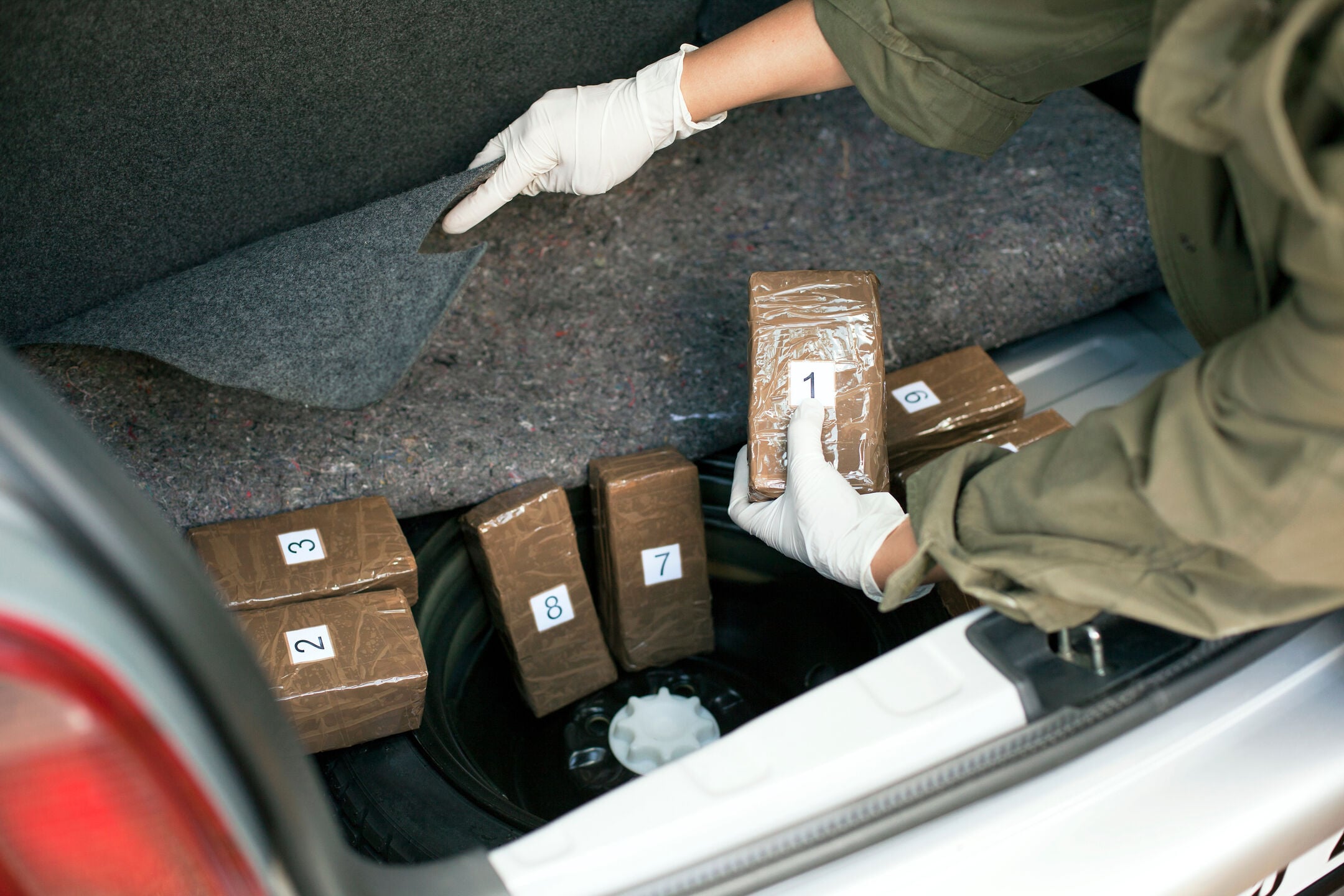
Aggravated possession of drugs is a phrase many people search when facing serious drug charges, but Minnesota does not actually use those exact words in its criminal code. What people call aggravated possession is prosecuted in Minnesota as a controlled substance crime under Minn. Stat. §§ 152.021 through 152.025, with the most serious version being “aggravated controlled substance crime in the first degree,” which carries up to 40 years in prison and a $1,000,000 fine. Minnesota divides drug possession into five degrees based on the type and amount of drug involved, plus the aggravated first-degree enhancement for the largest quantities or cases involving firearms. Understanding how these charges actually work is essential for anyone facing a drug possession case in Hennepin County, Ramsey County, or anywhere in the Twin Cities. This guide breaks down the six main drug possession charges and penalties in Minnesota.
- What “aggravated possession” means in MN: How Minnesota prosecutes serious drug possession through its controlled substance laws.
- Six key possession charges: The specific Minnesota drug possession offenses from fifth-degree to aggravated first-degree.
- The penalties you face: Prison ranges, mandatory minimums, and defenses for Minnesota drug possession charges.
How Minnesota Prosecutes Aggravated Drug Possession
Minnesota does not have a charge literally called “aggravated possession of drugs,” which is a term used in some other states like Ohio. Instead, Minnesota prosecutes serious drug possession through its five-degree controlled substance crime system, with an aggravated first-degree enhancement for the most serious cases.

What Does Aggravated Possession Mean in Minnesota?
In Minnesota, the closest equivalent to “aggravated possession of drugs” is aggravated controlled substance crime in the first degree under Minn. Stat. § 152.021, Subd. 2b. This is the most serious drug possession charge in the state, reserved for the largest quantities combined with aggravating factors. More broadly, any serious drug possession in Minnesota is charged under the controlled substance crime statutes, which grade offenses by degree based on the drug type, the weight involved, and aggravating factors like firearms or prior convictions. The word “aggravated” in Minnesota drug law specifically refers to this top-level first-degree enhancement, not to a separate standalone crime. Understanding this terminology is the first step to understanding what charge you actually face.
- Not a standalone MN crime: “Aggravated possession” is not literal Minnesota terminology.
- Closest equivalent: Aggravated controlled substance crime in the first degree under § 152.021.
- Degree-based system: Minnesota grades drug possession by type, weight, and aggravating factors.
- Aggravated means first-degree: The term refers to the top-level enhancement in Minnesota.
How Does Minnesota Grade Drug Possession?
Minnesota controlled substance possession crimes are divided into five degrees, with first-degree being the most serious and fifth-degree the least, plus the aggravated first-degree enhancement at the top. The degree depends on the type of drug and the amount possessed. First-degree possession covers the largest quantities, like 50 grams or more of cocaine or methamphetamine. Fifth-degree possession covers small amounts of controlled substances. The aggravated first-degree charge applies when a person possesses 100 or more grams (or 500 or more dosage units) of certain drugs, combined with a firearm or two or more aggravating factors. Each degree carries progressively harsher penalties, and the aggravated charge carries mandatory minimum prison time.
- Five degrees: First through fifth, graded by drug type and weight.
- Aggravated enhancement: The top level requires 100+ grams plus aggravating factors.
- Weight matters: The amount possessed is central to determining the degree.
- Harsher at the top: Higher degrees carry progressively more severe penalties.
6 Drug Possession Charges and Penalties in Minnesota
The six charges below cover the full range of drug possession offenses in Minnesota, from the aggravated first-degree charge down to fifth-degree possession and the special meth-related possession crime. Each carries serious consequences and requires an experienced Minnesota drug crime defense.
1. Aggravated Controlled Substance Crime in the First Degree
Aggravated controlled substance crime in the first degree is the most serious drug possession charge in Minnesota and the closest equivalent to what people mean by “aggravated possession of drugs.” Under Minn. Stat. § 152.021, Subd. 2b, a person commits this crime by possessing 100 or more grams (or 500 or more dosage units) of a mixture containing a controlled substance, combined with either possession of a firearm or the presence of two or more aggravating factors. This charge carries a maximum of 40 years in prison and a $1,000,000 fine, along with a mandatory minimum sentence of 86 months (over 7 years). It represents the top of the Minnesota drug possession penalty structure and is used against the most serious cases.
According to the Minnesota Office of the Revisor of Statutes, Minn. Stat. § 152.021, Subd. 2b provides that “a person is guilty of aggravated controlled substance crime in the first degree” when they violate the first-degree provisions and “the person or an accomplice sells or possesses 100 or more grams or 500 or more dosage units of a mixture containing the controlled substance at issue” with a firearm or two or more aggravating factors, establishing this as the most severely punished drug possession offense in Minnesota.
- Largest quantities: 100+ grams or 500+ dosage units triggers the aggravated charge.
- Firearm or factors: A weapon or two aggravating factors must also be present.
- Maximum penalty: Up to 40 years in prison and a $1,000,000 fine.
- Mandatory minimum: At least 86 months (over 7 years) in Minnesota prison.
2. First-Degree Controlled Substance Possession
First-degree controlled substance possession is the most serious standard possession charge, just below the aggravated level. Under Minn. Stat. § 152.021, Subd. 2, a person commits first-degree possession by possessing 50 grams or more of a mixture containing cocaine or methamphetamine, 25 grams or more of a mixture containing heroin, 50 grams or more of a narcotic other than those, or large amounts of other specified drugs. This charge carries a maximum of 30 years in prison and a $1,000,000 fine. Even for first-time offenders, Minnesota sentencing guidelines recommend a substantial prison sentence for first-degree possession, and a subsequent offense carries a mandatory minimum of four years in prison.
- Large quantities: 50+ grams of cocaine or meth, 25+ grams of heroin, or other large amounts.
- Maximum penalty: Up to 30 years in prison and a $1,000,000 fine.
- Presumptive prison: Sentencing guidelines recommend prison even for first offenses.
- Repeat minimum: A subsequent offense carries a four-year mandatory minimum.
3. Second-Degree Controlled Substance Possession
Second-degree controlled substance possession covers large but smaller quantities than first-degree. Under Minn. Stat. § 152.022, Subd. 2, a person commits second-degree possession by possessing 25 grams or more of a mixture containing cocaine or methamphetamine, 6 grams or more of a mixture containing heroin, 50 or more dosage units of certain drugs, or other specified amounts. This charge carries a maximum of 25 years in prison and a $500,000 fine. Like first-degree possession, second-degree carries presumptive prison time for many defendants under the sentencing guidelines, and the penalties increase with prior drug convictions. This is a common charge in cases involving significant drug quantities.
- Significant quantities: 25+ grams of cocaine or meth, 6+ grams of heroin, or other amounts.
- Maximum penalty: Up to 25 years in prison and a $500,000 fine.
- Presumptive prison: Many defendants face guideline-recommended prison time.
- Prior enhancements: Penalties increase with prior drug convictions.
4. Third-Degree Controlled Substance Possession
Third-degree controlled substance possession covers moderate quantities of drugs. Under Minn. Stat. § 152.023, Subd. 2, a person commits third-degree possession by possessing 10 grams or more of a narcotic drug, 3 grams or more of a mixture containing cocaine or heroin, 50 or more dosage units of a hallucinogen or amphetamine, or specified amounts of other drugs. This charge carries a maximum of 20 years in prison and a $250,000 fine. Third-degree possession also applies in certain situations involving smaller amounts in school zones or with prior convictions. It is one of the more commonly charged felony drug possession offenses in the Minnesota court system.
- Moderate quantities: 10+ grams of narcotics, 3+ grams of cocaine or heroin, or other amounts.
- Maximum penalty: Up to 20 years in prison and a $250,000 fine.
- School zones: Smaller amounts can qualify in school zones or with priors.
- Commonly charged: One of the more frequent felony possession charges in Minnesota.
5. Fifth-Degree Controlled Substance Possession
Fifth-degree controlled substance possession is the least serious felony drug possession charge, covering small amounts. Under Minn. Stat. § 152.025, a person commits fifth-degree possession by possessing any amount of a Schedule I, II, III, or IV controlled substance (other than small amounts of marijuana), or by procuring drugs through fraud. This charge is typically a felony with up to 5 years in prison and a $10,000 fine, but a first-time offense involving a very small amount (less than 0.25 grams, or one dosage unit, of most drugs) is charged as a gross misdemeanor with up to 364 days in jail. This is the most common drug possession charge and often applies to personal-use quantities.
- Small amounts: Any amount of most Schedule I-IV controlled substances.
- Felony penalty: Up to 5 years in prison and a $10,000 fine.
- Gross misdemeanor option: Very small first-time amounts may be gross misdemeanors.
- Most common charge: Fifth-degree applies to many personal-use possession cases.
6. Possession With Intent to Manufacture Methamphetamine
Minnesota treats possession of materials to make methamphetamine as a separate serious crime. Under Minn. Stat. § 152.0262, a person who possesses any chemical reagents or precursors with the intent to manufacture methamphetamine is guilty of a felony punishable by up to 10 years in prison and a $20,000 fine. This charge targets people who possess the ingredients and equipment used to produce meth, even before any actual manufacturing occurs. Because manufacturing any amount of methamphetamine is automatically a first-degree controlled substance crime under § 152.021, cases involving meth production carry some of the harshest drug penalties in Minnesota. Possession-with-intent cases often involve additional charges for the chemicals and equipment found.
- Precursor possession: Possessing meth-making chemicals with intent is a separate crime.
- Felony penalty: Up to 10 years in prison and a $20,000 fine.
- Before manufacturing: The charge applies even before any meth is actually produced.
- Stacked charges: These cases often involve additional related charges.

What to Know If You Are Facing Drug Possession Charges
Drug possession charges in Minnesota carry serious consequences that extend far beyond prison time and fines. Understanding the stakes and the defense options is essential for anyone facing a Minnesota drug charge.
What Are the Consequences Beyond Prison?
Beyond prison sentences and fines, a Minnesota drug possession conviction triggers a permanent felony record, lifetime federal firearm prohibition for felony convictions, immigration consequences including deportation for non-citizens, loss of professional licenses, and barriers to employment, housing, and federal student aid. Aggravated and first-degree possession charges also carry mandatory minimum sentences that limit a judge’s ability to impose lighter sentences. Asset forfeiture can allow the government to seize cash, vehicles, and property connected to the drug activity. These collateral consequences often outlast the prison sentence by decades, which is why aggressive early defense from a Minnesota drug crime lawyer is critical.
- Felony record: A permanent conviction affects employment, housing, and more.
- Firearm and immigration: Lifetime firearm ban and deportation risk for non-citizens.
- Mandatory minimums: Aggravated and first-degree charges carry required prison time.
- Asset forfeiture: Cash, vehicles, and property can be seized by the government.
How Does a Minnesota Drug Crime Lawyer Fight Possession Charges?
Experienced Minnesota drug crime defense attorneys attack possession cases on several fronts. The most powerful defense is often challenging the legality of the search and seizure that produced the drug evidence, because evidence obtained through an unlawful stop, search, or warrant can be suppressed, which frequently ends the case. Attorneys also challenge whether the defendant actually “possessed” the drugs, which is a key issue in cases involving shared vehicles or residences where constructive possession is disputed. They scrutinize the accuracy of drug weight and identity testing by the BCA lab, since the weight often determines the degree. When the evidence is strong, skilled attorneys negotiate for reduced charges, diversion programs, or treatment court placement.
- Search challenges: Suppressing illegally obtained drug evidence can end a Minnesota case.
- Possession disputes: Constructive possession is often challenged in shared spaces.
- Testing challenges: Attacking drug weight and identity testing by the BCA lab.
- Negotiation: Securing reduced charges, diversion, or treatment court placement.
Frequently Asked Questions
Does Minnesota have a crime called “aggravated possession of drugs”?
Not by that exact name. “Aggravated possession of drugs” is a term used in some other states, like Ohio. In Minnesota, the closest equivalent is “aggravated controlled substance crime in the first degree” under Minn. Stat. § 152.021, which covers possession of 100 or more grams of certain drugs combined with a firearm or aggravating factors. All serious drug possession in Minnesota is charged under the controlled substance crime statutes.
Is drug possession a felony in Minnesota?
Usually yes. First through fourth-degree controlled substance possession are all felonies, and even fifth-degree possession is typically a felony. The main exception is a first-time fifth-degree possession of a very small amount (less than 0.25 grams of most drugs), which can be charged as a gross misdemeanor. The degree depends on the type and amount of drug.
How much drug weight makes it aggravated first-degree possession in Minnesota?
Aggravated controlled substance crime in the first degree requires possession of 100 or more grams (or 500 or more dosage units) of a mixture containing the controlled substance, combined with a firearm or two or more aggravating factors. Without those additional factors, possession of large amounts is charged as standard first-degree possession.
What is the mandatory minimum for aggravated drug possession in Minnesota?
Aggravated controlled substance crime in the first degree carries a mandatory minimum sentence of 86 months (over 7 years) in prison. Standard first-degree possession carries a four-year mandatory minimum for subsequent offenses. Minnesota courts can sometimes depart from these minimums when there are substantial and compelling reasons, which a defense attorney can argue.
Can drug possession charges be dismissed in Minnesota?
Yes. Drug possession charges are frequently dismissed when defense attorneys successfully challenge the legality of the search that produced the evidence, dispute whether the defendant actually possessed the drugs, or expose problems with the drug testing. Even when dismissal is not possible, charges can often be reduced to lower degrees with much lower penalties through skilled negotiation.
What is constructive possession in a Minnesota drug case?
Constructive possession means the drugs were not found directly on your person but in a place you controlled, like your car, home, or bag. Prosecutors use constructive possession to charge people when drugs are found in shared spaces. This is a key area of defense, because the state must prove you knew about and had control over the drugs, which can be difficult when multiple people had access.

Defend Your Future With The Law Offices of Josh Johnson
Serious drug possession charges in Minnesota carry some of the harshest penalties in the state, and the difference between a conviction and a reduced charge or dismissal often depends on how quickly and skillfully your defense attacks the state’s evidence. The Law Offices of Josh Johnson defends clients against controlled substance and aggravated possession charges across Hennepin, Ramsey, Dakota, Anoka, and Washington counties, combining detailed knowledge of Minn. Stat. §§ 152.021 through 152.025 and the related possession and forfeiture laws with a strategic approach that challenges every stage of the state’s case. As an experienced Minnesota drug crime lawyer, Josh Johnson personally reviews every search warrant, lab report, and possession theory to identify the weaknesses that can lead to suppressed evidence, reduced charges, or outright dismissal. If you are under investigation, have been charged with drug possession, or have had property seized in a drug case anywhere in the Twin Cities area, contact The Law Offices of Josh Johnson today for a free, confidential consultation and find out what defenses apply to your Minnesota case before the state builds it any further.
