
If you’re wondering how to file a restraining order in Minnesota, it’s likely because you or someone you care about is experiencing harassment, threats, or unwanted contact. Restraining orders are court-issued protections that can legally prevent someone from contacting, approaching, or harming you. While the process is designed to be accessible, knowing your legal rights and how to complete each step can make a major difference in your safety and peace of mind.
- Restraining orders offer protection: Minnesota courts can restrict contact between you and the person harassing or threatening you.
- Two main types exist: Harassment Restraining Orders (HROs) and Orders for Protection (OFPs).
- Proper filing matters: Knowing how and where to file, what to include, and what to expect in court can affect whether your request is granted.
Understanding the Minnesota Statute on Restraining Orders
Restraining orders in Minnesota are governed by two main statutes, depending on the nature of the relationship and the behavior involved. Understanding these statutes helps clarify what qualifies for protection and what the court looks for when issuing an order.
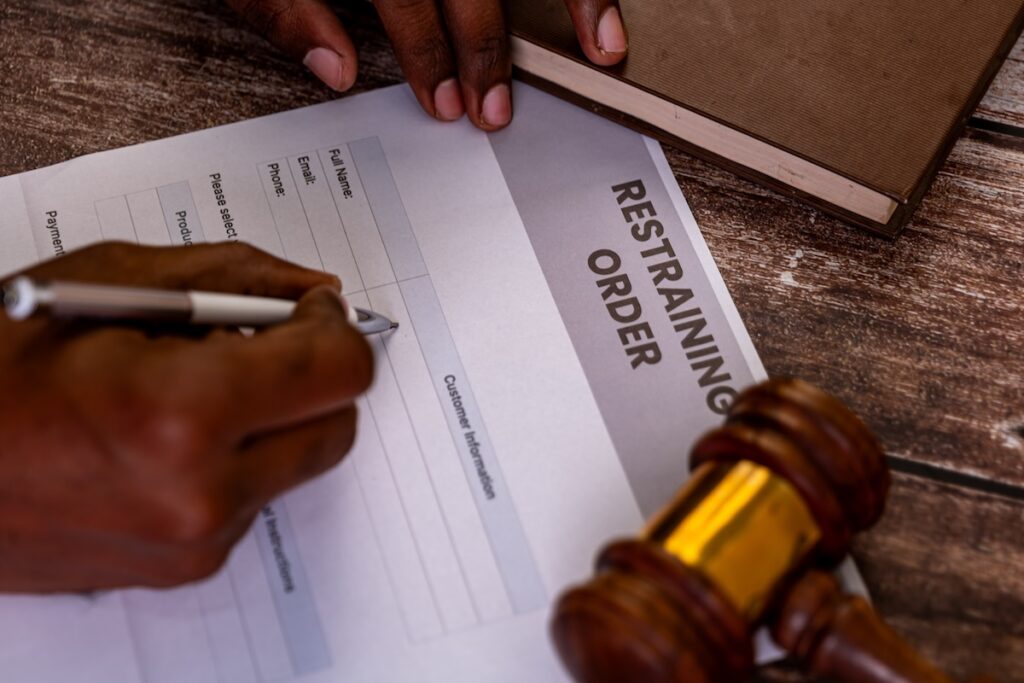
Harassment Restraining Order (HRO) – Minn. Stat. § 609.748
This statute applies to individuals who are not family or household members. It defines harassment as:
- Repeated, unwanted acts that have or are intended to have an adverse effect on another person
- Words or gestures that threaten or create fear of physical harm—behavior that often overlaps with criminal assault charges.
- Stalking or following someone
- Unwanted contact, including through mail, phone, or electronic communication
- Targeted residential picketing or blocking someone’s access to their home
Under this statute, the court can issue a Harassment Restraining Order to prohibit contact or proximity to the petitioner, their home, workplace, or school. A violation of this order can result in criminal charges.
Order for Protection (OFP) – Minn. Stat. § 518B.01
This statute covers domestic abuse situations involving family or household members. Note that an OFP is a civil order and is distinct from a Domestic Abuse No Contact Order (DANCO), which is typically issued by a judge during a criminal proceeding. It defines domestic abuse as:
- Physical harm, bodily injury, or assault
- The infliction of fear of imminent physical harm
- Criminal sexual conduct
- Interference with emergency calls
“Family or household members” include current or former spouses, parents and children, persons related by blood, people who live or have lived together, those who share a child, and those involved in a romantic or sexual relationship.
An OFP can prohibit the respondent from contacting the petitioner, require them to leave a shared residence, grant temporary custody of children, and even restrict firearm possession.
Who Can Request a Restraining Order?
You do not need a lawyer or a police report to request a restraining order in Minnesota. You can file on your own behalf, or on behalf of a minor or vulnerable adult. The person filing is called the petitioner, and the person the order is filed against is the respondent.
Restraining orders may be appropriate if:
- You’re experiencing repeated unwanted calls, texts, visits, or online messages
- You’ve been physically threatened or harmed
- You’re being followed or surveilled
- You’re a victim of domestic violence or abuse
Now, let’s break down the process into five key steps.

5 Keys to Filing a Restraining Order in Minnesota
If you feel unsafe, the legal system offers tools to help. While every situation is unique, these five steps provide a reliable roadmap for how to file a restraining order in Minnesota.
1. Choose the Right Type of Protective Order
Selecting the correct type of order is essential. The court may deny your request if you file under the wrong category.
- Use an OFP if the respondent is a spouse, former partner, co-parent, household member, or someone you’ve had a romantic relationship with, and there is a claim of domestic abuse.
- Use an HRO if the person is not a family or household member, and the issue involves harassment, stalking, or unwanted contact.
2. Complete the Required Forms Accurately
Visit the Minnesota Judicial Branch website or your local courthouse to access the appropriate forms. You will need to describe the behavior you’re concerned about and provide specific dates, times, and details.
- Use clear, factual language: Stick to specific examples of what the person has done.
- Avoid exaggeration: Courts evaluate credibility—stick to the facts, even if they’re upsetting.
- Include evidence if possible: Text messages, voicemails, emails, or photos can support your petition.
3. File the Petition at the Appropriate Courthouse
You can file your forms electronically, by mail, or in person at the district court in the county where you live, where the respondent lives, or where the incidents occurred.
- No filing fee for OFPs: These are free to file.
- Fees may apply for HROs: However, the court may waive the fee if you allege physical harm or threats.
Once filed, a judge will review your request—sometimes the same day.
4. Request a Temporary Order (Ex Parte)
If you believe you are in immediate danger, you can ask for a temporary restraining order (also called an “ex parte order”) that goes into effect before the full court hearing.
- Ex parte orders take effect quickly: Often the same day or within 24 hours if approved.
- The respondent is not present: This temporary order is based solely on your sworn statement.
- Enforceable by law: Once granted, the order is legally binding and the respondent will be served.
5. Attend the Full Court Hearing
A hearing is usually scheduled within a few weeks. The respondent has the right to appear and respond to your claims. This is your opportunity to present your evidence and explain why the order should remain in place.
- Bring documentation: Photos, screenshots, call logs, and witness testimony can strengthen your case.
- You can have a lawyer present: While not required, legal support can help you present your case more effectively.
- Final orders can last up to 2 years, and longer if there’s ongoing risk or prior violations.

What Happens If the Restraining Order Is Violated?
Violating a restraining order is a criminal offense in Minnesota. If the respondent contacts you in any way that violates the order—by phone, text, social media, or in person—you should:
- Call the police immediately: Violations are taken seriously and may result in arrest.
- Document the contact: Save texts, record voicemails, and write down details while they’re fresh.
- Notify the court or your attorney: If you already have legal representation, keep them informed of violations.
The court can impose additional penalties, including jail time. Depending on the severity of the violation and the respondent’s history, they may face misdemeanor or felony charges.
Can a Restraining Order Be Dismissed or Challenged?
Yes. The respondent can request a hearing to challenge the order or ask that it be modified or dismissed. The court will review both sides and determine whether the order should remain in place, change, or be dropped.
As the petitioner, you can also request a modification or dismissal—especially if circumstances change or the order is no longer needed.
Do You Need a Lawyer to File?
You are not required to have a lawyer to file a restraining order, but legal advice is strongly recommended if:
- You expect the respondent to challenge the order
- The situation is complicated (shared custody, cohabitation, mutual accusations)
- The respondent has already hired an attorney
- You need help gathering or presenting evidence
Having an experienced attorney ensures your case is presented clearly and increases your chances of success.
Protect Yourself With the Right Legal Support
Learning how to file a restraining order in Minnesota is the first step toward reclaiming your safety and peace of mind. While the process is open to the public, having the right guidance can help you avoid delays, confusion, or costly errors.
If you or a loved one is under investigation or charged with a crime involving a restraining order, contact us today for a free consultation. We’ll explain your rights, explore your options, and provide experienced defense every step of the way.
