
Is verbal abuse a crime in Minnesota? The short answer is sometimes; verbal conduct by itself is not a standalone offense, but specific patterns of speech can support charges under domestic assault, harassment, stalking, and threats of violence statutes that carry up to five years in prison and $10,000 in fines. Many people assume that name-calling, insults, screaming matches, and ongoing emotional manipulation fall outside the reach of criminal law because they involve only words. The reality is more complicated, and Minnesota prosecutors regularly bring charges when verbal conduct crosses into causing fear of immediate bodily harm, repeated unwanted contact, or threats of violence against a family or household member.
- What the law actually covers: Which forms of verbal conduct can trigger criminal charges in Minnesota and which cannot.
- The statutes in play: How domestic assault, harassment, stalking, and threats of violence laws apply to spoken and written words.
- Penalties and protections: Sentencing ranges, restraining orders, and the legal options available to both accusers and the accused.
When Words Become a Crime in Minnesota
Minnesota criminal law does not punish verbal abuse as a freestanding offense, but a single statement or a pattern of communications can support charges under at least four separate criminal statutes. The dividing line typically depends on whether the words created fear of immediate harm, formed part of a repeated pattern, or expressed a specific threat of violence.
What Is the Legal Difference Between Verbal Abuse and Verbal Assault?
Verbal abuse is a general term covering hurtful or controlling speech without a precise legal definition, while verbal assault in Minnesota refers to conduct that meets the elements of an actual criminal statute such as domestic assault or threats of violence. Under Minn. Stat. § 609.2242, a person commits domestic assault when they act with intent to cause fear in a family or household member of immediate bodily harm or death, which means screaming threats during an argument can qualify even without any physical contact. The same words spoken between strangers might fall under fifth-degree assault, harassment, or threats of violence rather than domestic assault. Prosecutors evaluate the relationship, the specific language used, the surrounding conduct, and whether the listener felt genuine fear in the moment.
- Verbal abuse: A broad term for harmful speech that may or may not violate any specific criminal statute.
- Verbal assault: Conduct meeting elements of a Minnesota criminal statute such as § 609.2242 or § 609.713.
- Fear of immediate harm: Words paired with menacing conduct that cause real fear can satisfy assault statutes.
- Relationship matters: Domestic assault charges require a family or household member; other statutes do not.
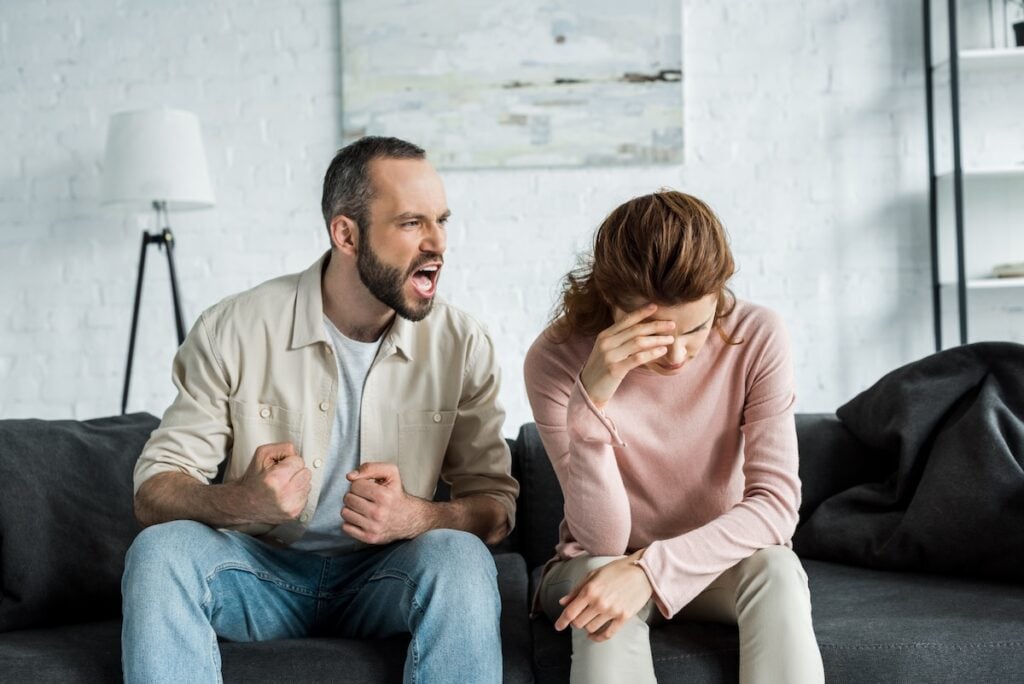
4 Minnesota Statutes That Criminalize Verbal Conduct
Four Minnesota statutes most commonly cover what people call verbal abuse: § 609.2242 (domestic assault), § 609.748 (harassment restraining orders), § 609.749 (stalking and criminal harassment), and § 609.713 (threats of violence, formerly terroristic threats). Each statute targets a different facet of verbal misconduct, with domestic assault focused on creating fear within a household, harassment focused on repeated unwanted contact, stalking focused on a pattern designed to cause substantial emotional distress, and threats of violence focused on specific declarations of violent intent. A single course of conduct often supports charges under multiple statutes simultaneously, and county attorneys frequently stack charges to maximize leverage during plea negotiations. Defense outcomes depend heavily on which statute is charged and what evidence supports each element.
- Domestic assault (§ 609.2242): Verbal conduct that causes a family member to fear immediate bodily harm.
- Harassment (§ 609.748): Repeated unwanted communications that a reasonable person would find harassing.
- Stalking (§ 609.749): Patterns of conduct intended to cause substantial emotional distress.
- Threats of violence (§ 609.713): Specific threats to commit a crime of violence with intent to terrorize.
How Domestic Assault Laws Apply to Verbal Conduct
Domestic assault under Minn. Stat. § 609.2242 is the most common charge in cases that began as verbal disputes between intimate partners, spouses, parents, or roommates. Many defendants are arrested not because they hit anyone, but because they yelled, raised a fist, or made statements that caused the alleged victim to fear immediate bodily harm.
What Counts as Domestic Assault Without Physical Contact?
Under § 609.2242, Subdivision 1, a person commits domestic assault when they act with intent to cause fear in a family or household member of immediate bodily harm or death, even without any physical touching. Minnesota courts have upheld convictions based on shouting threats while cornering the alleged victim, throwing objects near the person, punching walls or furniture in a threatening manner, and making explicit verbal threats during heated arguments. The key element is intent to cause fear combined with conduct that a reasonable person would interpret as threatening immediate violence. Police responding to a domestic call frequently arrest one party based on the other’s description of frightening words and gestures, even when no marks or injuries are visible.
- Cornering behavior: Blocking exits while yelling can support a fear-based domestic assault charge.
- Object throwing: Hurling items near (not at) the alleged victim often qualifies as creating fear of harm.
- Explicit threats: Statements such as “I’ll hit you” or “you’re going to regret this” during arguments meet the standard.
- Punching walls: Aggressive displays directed near the alleged victim can satisfy the intent element.
How Does Minnesota Define Family or Household Member?
Minn. Stat. § 518B.01, Subdivision 2 defines family or household members broadly to include spouses, former spouses, parents and children, persons related by blood, persons who are presently or formerly residing together, persons who have a child in common regardless of marriage or cohabitation, and persons involved in a significant romantic or sexual relationship. This expansive definition means domestic assault charges can apply to dating partners who have never lived together, ex-spouses years after divorce, parents and adult children, and even cousins or siblings sharing housing. The definition also extends to current and former roommates who share no familial or romantic connection. The breadth of the statute catches many people off guard when ordinary household disputes escalate to police involvement.
- Current and former spouses: Marriage status does not need to be current at the time of the alleged assault.
- Dating partners: Romantic or sexual relationships qualify even without cohabitation.
- Co-parents: Sharing a biological child triggers coverage regardless of relationship status.
- Roommates: Any persons currently or formerly residing together fall under the statute.
According to the Minnesota Office of the Revisor of Statutes, Section 609.2242 establishes that committing an act with intent to cause fear in a family or household member of immediate bodily harm or death is a misdemeanor punishable by up to 90 days in jail and a $1,000 fine, with enhanced penalties of up to 364 days for repeat offenders and up to five years in prison for those with two or more qualifying prior domestic violence convictions within ten years.
How Harassment and Stalking Laws Reach Verbal Conduct
Minnesota’s harassment and stalking statutes capture verbal and written conduct that does not necessarily occur in a household setting but involves repeated unwanted communication. These laws often apply when verbal abuse continues after a relationship ends, through text messages, social media, phone calls, and in-person confrontations.
What Conduct Triggers a Harassment Restraining Order?
Under Minn. Stat. § 609.748, a court can issue a harassment restraining order against any person who engages in repeated, intrusive, or unwanted acts, words, or gestures that have a substantial adverse effect on the safety, security, or privacy of another. Unlike orders for protection, harassment restraining orders are not limited to family or household members and can be obtained against neighbors, coworkers, classmates, former friends, or anyone whose conduct meets the statutory standard. Violation of a harassment restraining order is a misdemeanor on a first offense and escalates to a gross misdemeanor or felony with repeat violations or aggravating circumstances. The order itself is a civil matter, but violations carry criminal consequences and can result in immediate arrest.
- Repeated conduct: Single incidents typically do not qualify; the statute targets patterns of behavior.
- Unwanted contact: Calls, texts, social media messages, and in-person approaches all count.
- Substantial adverse effect: The conduct must meaningfully impact the petitioner’s safety or peace of mind.
- Civil order, criminal violation: Obtaining the order is civil, but violating it triggers criminal charges.
When Does Verbal Conduct Become Criminal Stalking?
Minn. Stat. § 609.749 makes it a gross misdemeanor or felony to engage in a course of conduct that the defendant knows or has reason to know would cause the victim to feel terrorized, frightened, threatened, oppressed, persecuted, or intimidated, when the conduct actually causes that reaction. Stalking can include repeated phone calls, persistent text messaging, sending unwanted gifts or letters, monitoring the victim’s location, showing up at workplaces or homes, and posting harassing content on social media. The felony version under Subdivision 5 carries up to ten years in prison when the conduct is motivated by bias, when a weapon is used, when the victim is under 18, or when the defendant has prior qualifying convictions. Patterns of verbal conduct that fall short of explicit threats often still satisfy the stalking standard when they cause documented emotional distress.
- Course of conduct: Two or more incidents within a defined period are typically required.
- Substantial emotional distress: Documented fear, anxiety, or disruption to daily life is central evidence.
- Electronic stalking: Persistent unwanted texts, calls, and messages frequently support charges.
- Enhanced felony: Bias motivation, weapons, minor victims, or priors elevate penalties to ten years maximum.
How Do Threats of Violence Charges Apply to Verbal Conduct?
Minn. Stat. § 609.713 criminalizes threats, direct or indirect, to commit any crime of violence with the purpose to terrorize another or in reckless disregard of the risk of causing such terror. Unlike harassment and stalking, this statute does not require a pattern; a single verbal threat can result in a felony charge carrying up to five years in prison and a $10,000 fine. Statements such as “I am going to kill you,” “I will burn your house down,” or “I know where your kids go to school” often trigger charges under this statute when made in a way that a reasonable person would interpret as a true threat rather than empty venting. Context, tone, prior history between the parties, and the listener’s reaction all factor into whether prosecutors pursue charges.
- Single statement enough: No pattern of conduct is required for a § 609.713 charge.
- Direct or indirect: Explicit threats and clearly implied threats both qualify under the statute.
- Felony exposure: Conviction carries up to five years in prison and a $10,000 fine.
- Context dependent: Tone, setting, and prior relationship history shape whether charges are filed.
Frequently Asked Questions
Can you go to jail for yelling at your spouse?
Yes, in Minnesota you can be arrested and jailed for yelling at a spouse if the conduct meets the elements of domestic assault under § 609.2242, particularly when the yelling is accompanied by threats, gestures, or actions that create fear of immediate bodily harm. A first offense is a misdemeanor with up to 90 days in jail. Police often arrest one party based on the other’s description of frightening verbal conduct even without physical injuries.
Is emotional abuse a crime in Minnesota?
Emotional abuse by itself is not a standalone crime in Minnesota, but specific patterns of emotionally abusive conduct can support charges under harassment, stalking, or domestic assault statutes. Family court also considers emotional abuse in custody decisions even when no criminal charges result. Victims can petition for an order for protection or harassment restraining order without criminal involvement.
What is the difference between an OFP and a harassment restraining order?
An Order for Protection (OFP) under Minn. Stat. § 518B.01 is available only against family or household members and requires allegations of domestic abuse, while a Harassment Restraining Order (HRO) under § 609.748 is available against anyone whose repeated conduct adversely affects the petitioner’s safety. OFPs carry stronger automatic protections including firearm prohibitions and longer durations. Both orders are civil but trigger criminal penalties when violated.
Can text messages be used as evidence of verbal abuse?
Yes, text messages, voicemails, emails, and social media communications are routinely admitted as evidence in Minnesota harassment, stalking, and threats of violence prosecutions. Screenshots should be preserved with timestamps and sender information, and providers can be subpoenaed for records when authenticity is contested. Digital communications often form the strongest evidence in verbal abuse cases.
Does the alleged victim have to press charges in Minnesota?
No, the decision to file domestic assault, harassment, or stalking charges belongs entirely to the county attorney, not the alleged victim. Minnesota’s mandatory arrest policies in domestic violence cases mean that once police are called and probable cause exists, charges typically proceed regardless of the alleged victim’s wishes. This often surprises couples whose argument was reported by a neighbor or third party.
How long does a domestic assault charge stay on your record?
A domestic assault conviction in Minnesota remains on a criminal record permanently unless expunged, and federal law imposes a lifetime firearm prohibition for any qualifying misdemeanor domestic violence conviction. Misdemeanor expungement eligibility begins two years after sentence completion, gross misdemeanors after three years, and felonies after five years. Expungement is discretionary and depends on factors including rehabilitation and the nature of the offense.

Protect Your Rights With The Law Offices of Josh Johnson
Whether you are facing accusations of verbal abuse that escalated into criminal charges or you are trying to understand your options after experiencing domestic conflict, the laws governing words and conduct in Minnesota are complex, fast-moving, and unforgiving when handled without skilled representation. The Law Offices of Josh Johnson defends clients across Hennepin, Ramsey, Dakota, Anoka, and Washington counties against domestic assault, harassment, stalking, and threats of violence charges, combining detailed knowledge of Minnesota Statutes with a strategic approach to both the criminal case and any related family court or restraining order proceeding.
Josh Johnson personally evaluates the evidence, identifies weaknesses in the prosecution’s case, and pursues every available path from dismissal to diversion to acquittal. If verbal abuse allegations have led to criminal charges, an order for protection, or a harassment restraining order, contact The Law Offices of Josh Johnson today for a free, confidential consultation and learn exactly where you stand before your next court date arrives.
