
A Minneapolis drug crime lawyer can be the difference between years in prison and a case that never even gets charged, but only if you bring one in early enough to make a real impact. Minnesota has some of the toughest drug laws in the Midwest, with first-degree controlled substance crimes carrying up to 30 years in prison and fines up to $1,000,000 under Minn. Stat. § 152.021. Every hour that passes after an arrest, a search, or a police interview is another hour the prosecution uses to build its case, and every statement you make or piece of evidence police gather without a lawyer present can end up in front of a Hennepin County jury. This guide breaks down five specific ways a Minneapolis defense attorney can change the direction of your case when you bring them in early, plus what you need to know about the drug laws you may be facing.
- What early legal help actually does: Concrete ways a lawyer can protect you before charges are even filed.
- Five reasons to move fast: Specific defense actions that only work with early intervention.
- What is at stake: A plain-English look at Minnesota’s drug penalties and long-term consequences.
Why Early Legal Help Matters in Minneapolis Drug Cases
Drug cases in Hennepin County move fast, and much of the most important defense work happens in the first hours and days after a police encounter. Getting a lawyer involved right away can shift the entire trajectory of the case in ways that are impossible to replicate later.
How Minnesota’s Drug Laws Set the Stakes
Minnesota classifies controlled substance crimes into five degrees under Minn. Stat. §§ 152.021 through 152.025, with first-degree cases being the most serious and fifth-degree the least. First-degree crimes involve large amounts (like 50 grams or more of cocaine or methamphetamine, or 25 grams or 100 dosage units of heroin or fentanyl) and carry up to 30 years in prison. Second-degree crimes drop the weight thresholds and carry up to 25 years. Third, fourth, and fifth-degree crimes cover smaller amounts and specific circumstances like sale to a minor or possession of small quantities. Even the lowest degree can result in felony convictions and permanent criminal records unless a defense attorney intervenes early to change the outcome.
- First degree: Largest amounts, up to 30 years in prison and $1,000,000 in fines.
- Second degree: Mid-sized amounts, up to 25 years in prison and $500,000 in fines.
- Third and fourth degrees: Smaller amounts and specific circumstances, up to 20 or 15 years.
- Fifth degree: Smallest amounts, felony with up to 5 years or gross misdemeanor for very small amounts.
Why Minneapolis Cases Are Particularly Complex
Minneapolis drug cases are handled by the Hennepin County Attorney’s Office, one of the largest prosecutorial offices in Minnesota, and often involve multi-agency investigations combining the Minneapolis Police Department (MPD), the Hennepin County Sheriff’s Office, the Metro Gang Strike Force, and federal agencies like the DEA and FBI. Cases can involve wiretaps, confidential informants, long-term surveillance, and sophisticated forensic evidence. The Hennepin County District Court is also home to specialty programs like the Hennepin County Drug Court, which can offer alternatives to prison for eligible defendants but requires an experienced attorney to navigate. All of this makes Minneapolis drug cases some of the most complex criminal matters in the state, and early legal help is critical for figuring out which path leads to the best outcome.
- Hennepin County Attorney: One of Minnesota’s largest and most aggressive prosecutor offices.
- Multi-agency investigations: MPD, county sheriff, gang strike force, DEA, and FBI often work together.
- Complex evidence: Wiretaps, informants, surveillance, and forensic analysis often involved.
- Drug court option: Hennepin County Drug Court is a treatment-based alternative for qualifying cases.

5 Reasons Early Legal Help Can Change Your Case
The five reasons below are the most powerful arguments for hiring a Minneapolis drug crime lawyer at the earliest possible moment. Each one represents a defense strategy that becomes harder or impossible to use as time passes.
1. A Lawyer Can Sometimes Stop Charges From Being Filed
The window between an arrest or investigation and the formal filing of charges is one of the most valuable moments in a criminal case. During this pre-charge phase, a defense lawyer can contact the Hennepin County Attorney’s Office, present favorable evidence, challenge the strength of the police investigation, negotiate for the case not to be filed, or arrange for the client to enter treatment or other pre-charge diversion programs. Once charges are filed, this leverage largely disappears. Prosecutors are much less likely to dismiss a case they have already publicly charged, both because of political considerations and because the case has already been logged in their system. Early intervention gives the defense a rare chance to affect the outcome before the case even officially begins.
- Pre-charge negotiations: Defense attorneys can talk with prosecutors before charges are filed.
- Diversion enrollment: Some cases can be resolved through treatment before ever being charged.
- Weakness exposure: Attorneys can highlight weaknesses in the police case at this critical stage.
- Charging pressure: Prosecutors have far less flexibility once a case is publicly filed.
2. A Lawyer Protects You From Damaging Statements
The single most common way people hurt their own drug cases is by talking to police without a lawyer present. Officers are trained to build rapport, ask open-ended questions, and get people to explain themselves in ways that create damaging admissions. Anything you say can and will be used against you, and even innocent-sounding statements often turn into evidence that undermines your defense. A Minneapolis drug crime lawyer can invoke your Fifth Amendment right to remain silent immediately, cut off further police questioning, and make sure any interviews that do happen are on your terms. Bringing a lawyer in before the interview means you never have to worry about what you might have said.
According to the Minnesota Office of the Revisor of Statutes, Minn. Stat. § 152.021, Subd. 3(a) provides that “a person convicted under subdivisions 1 to 2a, paragraph (a), may be sentenced to imprisonment for not more than 30 years or to payment of a fine of not more than $1,000,000, or both,” making it critical that defendants do not say anything to police that could tip the scale toward a first-degree charge.
- Right to silence: The Fifth Amendment protects you, but only if you actually invoke it.
- Police interview tactics: Officers use rapport, open questions, and pressure to draw statements.
- Innocent-sounding damage: Even benign comments often become evidence for the prosecution.
- Attorney as buffer: A lawyer can stop questioning and control any interview that does happen.
3. A Lawyer Can Challenge Illegal Searches and Seizures Fast
Drug cases almost always turn on physical evidence like drugs, weapons, cash, phones, and paraphernalia, and much of that evidence comes from searches conducted under warrants or claimed exceptions to the warrant requirement. A defense attorney reviews the search warrant application, examines the affidavit for false statements or missing information, checks the officers’ actions on scene for violations of the Fourth Amendment, and files motions to suppress evidence that was collected illegally. If the evidence is suppressed, the prosecution’s case often collapses entirely. These challenges have deadlines and procedural requirements that make early lawyer involvement essential, and evidence preservation issues (like getting security footage before it is overwritten) also depend on rapid action.
- Warrant challenges: Attorneys examine warrant applications for legal defects that require suppression.
- Fourth Amendment defenses: Illegal stops, searches, and seizures can render evidence inadmissible.
- Suppression consequences: Excluded evidence often destroys the prosecution’s case entirely.
- Time-sensitive evidence: Video and digital records must be preserved before they are lost.
4. A Lawyer Can Position You for Drug Court or Diversion
Hennepin County has several treatment-focused alternatives to traditional prosecution, including the Hennepin County Adult Drug Court, the Community Court in downtown Minneapolis, and various pre-charge diversion programs run by the county attorney’s office. Getting into these programs typically requires the defense attorney to negotiate with the prosecutor, present a treatment plan, and demonstrate that the client is a good candidate. These programs can result in dismissed charges, no jail time, and no felony conviction on your record, but the application windows are narrow and the requirements strict. An experienced Minneapolis drug crime lawyer knows which cases qualify, how to present them, and how to get you positioned for the best possible alternative outcome.
- Hennepin County Drug Court: Treatment-based program that can lead to dismissed charges.
- Community Court: Downtown Minneapolis program for lower-level offenses with treatment focus.
- Pre-charge diversion: County attorney programs that can prevent formal charges from being filed.
- Narrow eligibility windows: These programs have strict deadlines that require early attorney action.
5. A Lawyer Can Protect You From Collateral Consequences
A drug conviction affects far more than jail time and fines. In Minneapolis and across Minnesota, felony drug convictions can trigger loss of the right to vote during incarceration, permanent firearm prohibition under federal law, immigration consequences including deportation for non-citizens, loss of federal student aid, disqualification from public housing, loss of professional licenses (nursing, teaching, law, and many more), and disqualification from many private employers who conduct background checks. A defense attorney thinks about all of these consequences from day one and structures the defense to protect you from as many of them as possible. Non-citizens especially need immigration-aware defense counsel because even seemingly minor pleas can result in mandatory removal from the country.
- Immigration impact: Even minor drug convictions can result in deportation for non-citizens.
- Firearm rights: Federal law imposes lifetime firearm prohibition for all felony convictions.
- Housing and benefits: Convictions block public housing, student aid, and other assistance.
- Professional licenses: Nursing, teaching, legal, and many other licenses can be lost.
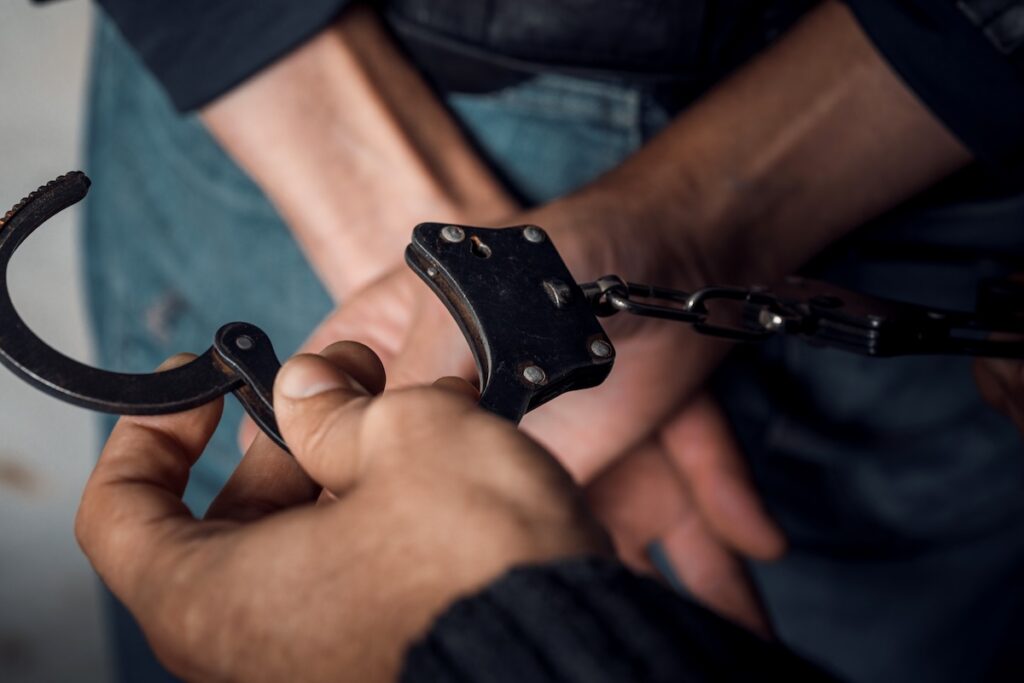
What Happens in a Typical Minneapolis Drug Case
Understanding how drug cases actually move through the Hennepin County system helps explain why early legal help matters so much. Each stage of the process presents opportunities that disappear if the defense is not ready to act.
How Do Drug Cases Start in Minneapolis?
Most Minneapolis drug cases begin with one of several triggering events: a traffic stop where drugs are found in the vehicle, a search warrant executed at a home, an arrest during a controlled buy set up by an informant, or an unrelated arrest during which drugs are discovered. From that starting point, the case is investigated by MPD narcotics officers or a task force like the Metro Gang Strike Force, evidence is submitted to the BCA lab for testing, and the case file is forwarded to the Hennepin County Attorney’s Office for charging review. This process can take days to months depending on lab backlog and case complexity. During that window, an experienced defense attorney can significantly influence the outcome.
- Traffic stops: Common source of drug arrests, especially near I-94, I-35W, and Lyndale Avenue.
- Search warrants: Home searches often produce the strongest evidence in drug cases.
- Controlled buys: Informant-driven purchases are common in sale and distribution cases.
- Lab testing time: Weeks-long BCA lab processing creates opportunities for defense action.
What Should You Do If You Have Been Arrested?
The most important step is to stop talking. Do not answer questions from police beyond providing your name and identification. Do not consent to any additional searches. Do not explain yourself, do not try to talk your way out, and do not agree to “cooperate” without first speaking with a defense attorney. Then, call an experienced Minneapolis drug crime lawyer as soon as possible. The lawyer will handle communications with police, prosecutors, and any investigating agents, and will start building your defense from the moment you retain them. The temptation to explain your side to police is powerful, but it almost always makes things worse.
- Stay silent: Provide only your name and ID; do not answer other questions.
- No consent to searches: Refuse further searches politely but firmly.
- Call a lawyer: Get an experienced defense attorney involved before saying anything else.
- Avoid social media: Do not post about the incident, delete evidence, or contact witnesses.
Frequently Asked Questions
How much does a Minneapolis drug crime lawyer cost?
Fees for a Minneapolis drug crime defense typically range from $2,500 for a straightforward fifth-degree possession case to $25,000 or more for a complex first-degree felony or federal case. Many defense firms offer free initial consultations, flat fees for specific charges, and payment plans. The cost of hiring an attorney is small compared to the lifetime cost of a felony drug conviction, which affects income, housing, and freedom for decades.
Can I get my drug case dismissed?
Yes, drug cases are dismissed in Minnesota all the time when defense attorneys successfully challenge the underlying search, expose weak evidence, negotiate diversion, or complete drug court programs. Not every case can be dismissed, but skilled early intervention gives you the best chance. Many cases that look unwinnable at first turn out to have hidden weaknesses that a good lawyer can find.
What is the difference between state and federal drug charges?
State drug charges are filed in Hennepin County District Court and prosecuted by the county attorney under Minnesota law. Federal drug charges are filed in the U.S. District Court for the District of Minnesota in Minneapolis and prosecuted by the U.S. Attorney’s Office under Title 21 of the U.S. Code. Federal cases typically involve larger quantities, cross-state activity, or federal agency investigations and generally carry longer mandatory minimum sentences.
Does marijuana still count as a drug crime in Minnesota?
Adult cannabis use became legal in Minnesota on August 1, 2023, but there are still limits and rules. Possessing more than the legal limit, driving under the influence, selling without a license, or possessing cannabis products in a school or workplace can still trigger criminal charges. Federal law still classifies marijuana as an illegal controlled substance, so federal charges are also possible.
Can I go to drug court instead of prison?
Sometimes, depending on your criminal history, the type of drug involved, and the specific charges. Hennepin County Adult Drug Court requires that participants have a substance use disorder connected to the offense, be willing to complete treatment, and meet other eligibility criteria. Not all cases qualify, but a defense attorney can evaluate whether drug court is an option and help you apply if it is.
How long does a drug conviction stay on my record?
A drug conviction stays on your Minnesota criminal record permanently unless expunged. Misdemeanor drug convictions become eligible for expungement two years after sentence completion, gross misdemeanors after three years, and felonies after four or five years depending on the charge. Expungement is discretionary, and the court considers factors including rehabilitation, the seriousness of the offense, and the reason for wanting the record sealed.

Defend Your Future With The Law Offices of Josh Johnson
A drug charge in Minneapolis can change the direction of your life within hours, and the difference between calling a defense attorney today and waiting a week can be measured in years of prison time and decades of collateral consequences. The Law Offices of Josh Johnson defends drug cases across Hennepin, Ramsey, Dakota, Anoka, and Washington counties, combining detailed knowledge of Minn. Stat. §§ 152.021 through 152.025 with a strategic approach that addresses every angle from search warrant challenges to drug court placement to immigration protection. Josh Johnson personally reviews every drug case to identify the earliest opportunities to intervene, whether that means pre-charge negotiations with the Hennepin County Attorney, motions to suppress illegally seized evidence, or positioning the case for diversion or treatment court. If you have been arrested, are under investigation, or have already been charged with a drug offense in Minneapolis or anywhere in the Twin Cities area, contact The Law Offices of Josh Johnson today for a free, confidential consultation and find out what defenses apply to your case before another day passes.
