
Understanding minnesota gun laws is important if you own a firearm, plan to purchase one, or want to make sure you are following the rules. Both Minnesota and federal law regulate who can possess firearms, how they are purchased, and where they may be carried. While many rules overlap, there are important differences that can affect your rights and responsibilities.
- Both state and federal laws apply at the same time: You must follow whichever law is stricter in a given situation.
- Background checks are required in most sales: Minnesota and federal law both require screening for certain firearm transfers.
- Permits differ from federal rules: Minnesota requires specific permits for purchasing certain firearms and for carrying a handgun in public.
- Penalties can be serious: Violations may result in state or federal criminal charges.
Below is a clear breakdown of how Minnesota gun laws compare to federal firearm laws.
Who Is Prohibited From Possessing a Firearm?
Federal law, under 18 U.S.C. § 922(g), prohibits certain individuals from possessing firearms. These include:
- People convicted of felony offenses
- Individuals convicted of domestic violence misdemeanors
- Individuals subject to certain domestic violence protection orders
- Unlawful users of controlled substances
- Individuals who have been involuntarily committed for mental health reasons
- Undocumented immigrants and certain non-citizens
Minnesota law also prohibits firearm possession by many of the same categories of people. In some cases, Minnesota law can impose additional or longer restrictions, particularly for violent crimes or domestic assault convictions.
If someone is prohibited under either state or federal law, possessing a firearm can result in serious criminal charges.
Background Checks: State vs Federal Requirements
Federal law requires background checks through the National Instant Criminal Background Check System when purchasing a firearm from a licensed dealer.
Minnesota law goes further in certain cases. As of 2023, Minnesota requires background checks for most private sales of:
- Handguns
- Semiautomatic military-style assault weapons
This means that even private transfers of these types of firearms generally must go through a licensed dealer or comply with state background check procedures. Federal law alone does not require background checks for all private sales nationwide, but Minnesota law does in these categories.
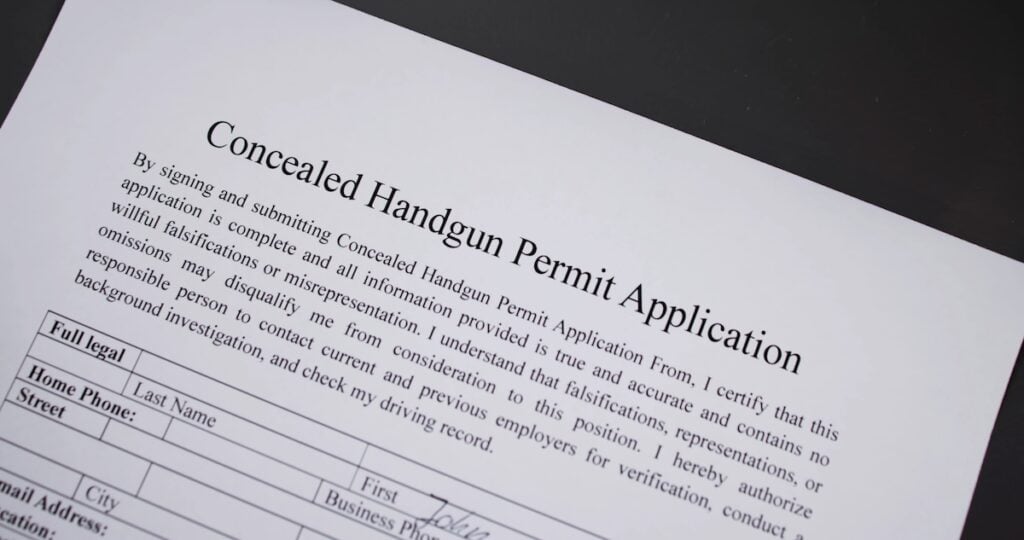
Permits to Purchase vs Federal Law
Federal law does not require a general “permit to purchase” firearms. It requires background checks for sales through licensed dealers.
Minnesota law, however, requires a Permit to Purchase for:
- Handguns
- Semiautomatic military-style assault weapons
Key facts about Minnesota’s Permit to Purchase:
- Minimum age is 18
- Issued by your local police department or sheriff
- Valid for one year
- Required before purchasing qualifying firearms
Long guns that are not classified as semiautomatic military-style assault weapons do not require this state permit, although federal background checks still apply when purchased from a dealer.
Permit to Carry in Minnesota
Federal law does not provide a general permit system for carrying firearms in public. Instead, it regulates possession in certain places such as federal buildings, airports, and school zones.
Minnesota law requires a Permit to Carry to carry a pistol in public, whether openly or concealed.
Important points about Minnesota’s Permit to Carry:
- Minimum age is 21
- Requires completion of a certified firearms training course
- Valid for five years
- Issued by the county sheriff
Without a valid permit, carrying a handgun in public in Minnesota is generally illegal, even if you lawfully own the firearm.
4 Types of Firearms: What Is Regulated Differently?
Some firearms are regulated primarily under federal law. These include:
- Machine guns manufactured after May 19, 1986
- Short-barreled rifles and shotguns
- Suppressors
- Destructive devices
These items fall under the National Firearms Act and require federal registration and tax stamps.
Minnesota law does not allow possession of machine guns except in limited circumstances allowed under federal law. Suppressors are legal in Minnesota if properly registered under federal requirements.
Minnesota does not currently have a general ban on semiautomatic rifles, and there is no statewide magazine capacity limit as of January 2026.
Extreme Risk Protection Orders
Minnesota enacted an Extreme Risk Protection Order law, effective January 1, 2024. This allows a court to temporarily prohibit a person from possessing firearms if a judge determines they pose a significant risk of causing bodily harm to themselves or others.
Federal law does not have a nationwide red flag system. These laws are handled at the state level. Under Minnesota’s law:
- A family or household member or law enforcement officer may petition the court
- A judge can issue a temporary order
- Firearms must be surrendered during the order period
- Orders can last up to one year, with possible extensions
Violating an Extreme Risk Protection Order can result in criminal penalties.
Where Firearms Are Restricted
Federal law prohibits firearms in certain locations, including:
- Federal courthouses
- Federal buildings
- Secure airport areas
- Post offices
Minnesota law restricts firearms in:
- K–12 school property, with limited exceptions
- Certain state buildings
- Private property where firearms are clearly prohibited
Even with a valid Permit to Carry, location-based restrictions still apply.
5 Key Differences to Remember
Here are the main differences between Minnesota gun laws and federal laws:
- Minnesota requires a Permit to Purchase for handguns and certain semiautomatic firearms, while federal law does not.
- Minnesota requires a Permit to Carry to legally carry a pistol in public.
- Minnesota mandates background checks for most private sales of handguns and semiautomatic military-style assault weapons.
- Federal law regulates specialized firearms under the National Firearms Act.
- Minnesota has an Extreme Risk Protection Order system that allows temporary firearm restrictions through court orders.
Both sets of laws apply at the same time. If one law is stricter than the other in a given situation, the stricter rule controls.

Speak With a Criminal Defense Attorney if You Have Questions
Gun laws can be complex, especially when state and federal rules overlap. Violations may result in serious criminal charges at either the state or federal level. If you have questions about firearm possession, permit requirements, or a pending charge, it is important to understand how the law applies to your specific situation.
The Law Offices of Josh Johnson focuses on criminal defense in Minnesota. If you are facing a firearm-related charge or need guidance about your rights under Minnesota gun laws, contact our office for a free consultation to review your situation and discuss your legal options.
