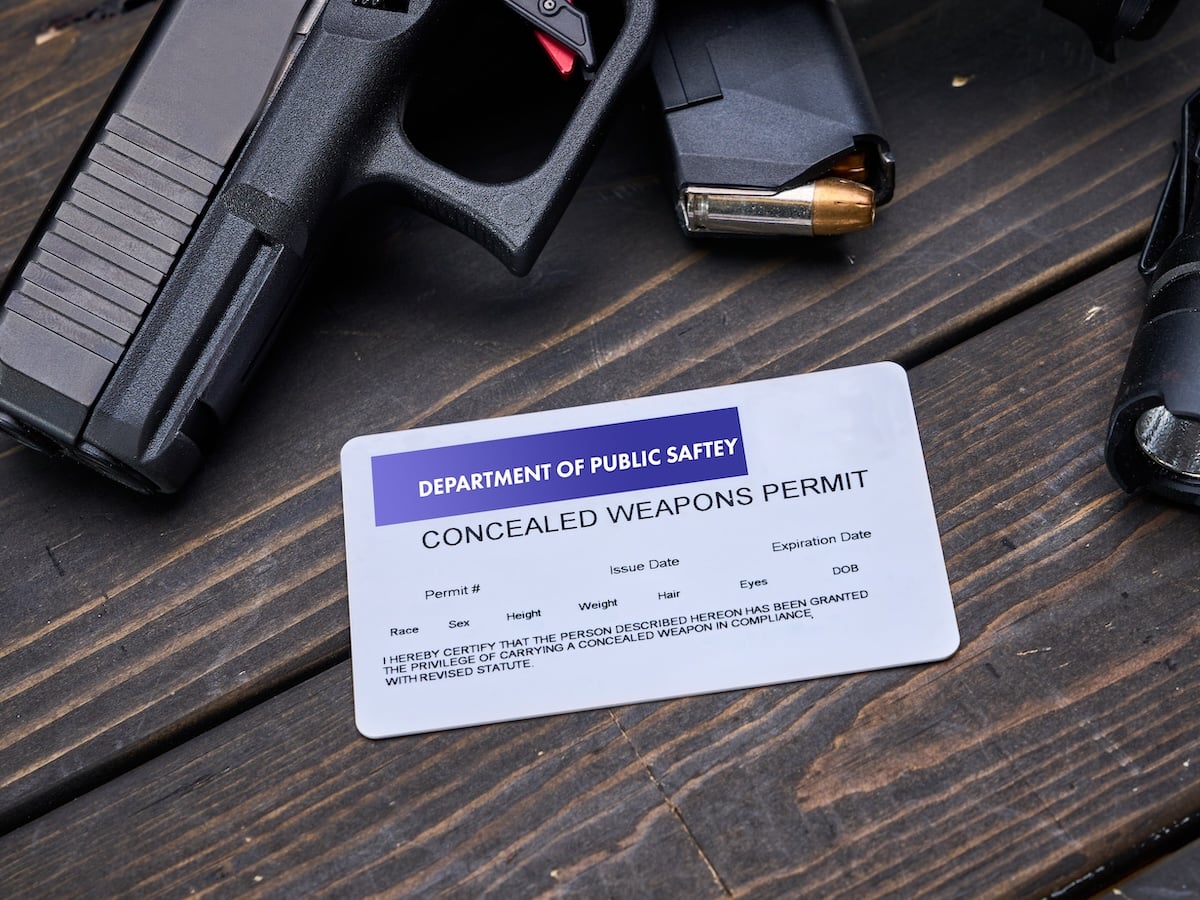
Open carry vs concealed carry is one of the most misunderstood topics in Minnesota firearms law, and getting it wrong can turn a lawful gun owner into a criminal defendant facing gross misdemeanor or felony charges. The single most important thing to understand is that Minnesota does not legally distinguish between open and concealed carry of pistols. Both require the exact same Permit to Carry a Pistol under Minn. Stat. § 624.714, and carrying a handgun in public without that permit is a gross misdemeanor on a first offense and a felony on any subsequent offense. Many gun owners assume that openly carrying a pistol on a hip holster somehow needs less documentation than tucking it under a jacket, but Minnesota law treats both exactly the same. This guide walks through the seven most important rules for anyone thinking about carrying a firearm in the Twin Cities or anywhere else in Minnesota.
- The big myth: Why open and concealed carry are treated identically under Minnesota law.
- Seven key rules: Specific requirements, restrictions, and penalties for firearm carry in Minnesota.
- What happens if you get it wrong: Criminal charges, license loss, and defense options.
How Minnesota Handles Firearm Carry Laws
Minnesota is a “shall-issue” state, meaning county sheriffs must issue a Permit to Carry a Pistol to any applicant who meets the statutory requirements and is not disqualified. Unlike some other states, there is no separate open-carry regime or license-free carry option for handguns in public.
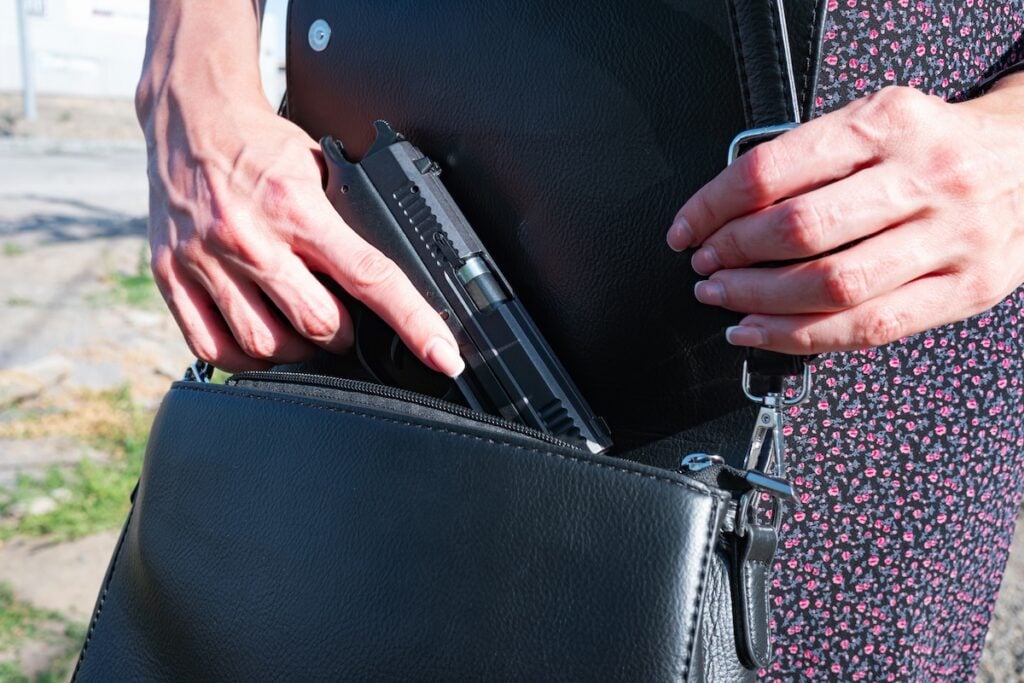
Is Open Carry Legal in Minnesota?
Yes, but only with the same Permit to Carry a Pistol required for concealed carry. Minnesota law does not distinguish between visible and hidden carry of a handgun in public. If you have a valid Minnesota Permit to Carry, you can lawfully carry your pistol openly in a holster or concealed under clothing, whichever you prefer, in most public places. If you do not have a permit, both open and concealed carry of a pistol in public are illegal. This uniform treatment sets Minnesota apart from states like Texas or Ohio that have different rules for open and concealed carry, and from states like Vermont and Arizona that allow permitless carry.
- Same permit for both: One Permit to Carry covers open and concealed pistol carry.
- Public places included: The permit is required for streets, sidewalks, parks, and most public spaces.
- Vehicle carry included: The same permit requirement applies inside cars, snowmobiles, and boats.
- Different from other states: Minnesota does not have permitless carry or a separate open-carry rule.
What Happens If You Carry Without a Permit?
Carrying a pistol in public without a Permit to Carry is a gross misdemeanor on the first offense, punishable by up to 364 days in jail and a $3,000 fine under Minn. Stat. § 624.714, Subd. 1a. A second or later offense is a felony with much more serious consequences. Police typically discover unpermitted carry during traffic stops, responses to disturbance calls, or when a firearm is displayed accidentally. Even people who legally own their firearms can end up facing these charges when they carry them into public spaces without the proper permit. The rules apply to visitors from other states unless Minnesota recognizes their home-state permit through reciprocity.
According to the Minnesota Office of the Revisor of Statutes, Minn. Stat. § 624.714, Subd. 1a provides that “a person, other than a peace officer, as defined in section 626.84, subdivision 1, who carries, holds, or possesses a pistol in a motor vehicle, snowmobile, or boat, or on or about the person’s clothes or the person, or otherwise in possession or control in a public place, as defined in section 624.7181, subdivision 1, paragraph (c), without first having obtained a permit to carry the pistol is guilty of a gross misdemeanor”.
- First offense: Gross misdemeanor with up to 364 days in jail and $3,000 fine.
- Second offense: Felony with much longer prison exposure.
- Traffic stops trigger: Many charges arise from routine traffic enforcement.
- Out-of-state visitors: Non-Minnesota permits only work if reciprocity applies.
7 Rules Every Minnesota Gun Owner Should Know
The seven rules below cover the core of Minnesota’s permit-to-carry system. Every gun owner in the state should know them cold before making any decision to carry in public.

1. The Same Permit Covers Both Open and Concealed Carry
Minnesota’s Permit to Carry a Pistol authorizes both open and concealed carry of a handgun in public. There is no separate open-carry license, no separate concealed-carry license, and no exception for carrying openly on your own belt versus hiding a gun in a purse or under clothing. This is the single most important rule to understand because it overturns what most people assume based on movies, TV, and laws in other states. Whether you plan to carry openly or concealed, the process, requirements, and restrictions are identical. The permit is issued by your county sheriff and is valid for five years before it needs renewal.
- One permit for both: No separate license or exemption for open versus concealed.
- Sheriff issues: Your local county sheriff processes and issues the permit.
- Five-year term: Permits are valid for five years before renewal is required.
- Uniform requirements: Same training, background check, and application for both.
2. You Must Meet Specific Eligibility Requirements
To qualify for a Minnesota Permit to Carry, you must be at least 21 years old, be a U.S. citizen or permanent resident, complete an approved firearms training course, submit a completed application, and not be prohibited from possessing a firearm under state or federal law. Federal prohibited persons include those with felony convictions, domestic violence misdemeanor convictions, active protective orders, dishonorable military discharges, and certain mental health commitments. State-level disqualifiers include gang database listings and certain misdemeanor assault convictions. The sheriff runs a criminal background check through the Minnesota Crime Information System before issuing the permit.
- Age 21 minimum: No exceptions for adults under 21.
- Citizenship or permanent residency: U.S. citizens and green card holders qualify.
- Training required: Must complete an approved course within one year of applying.
- No prohibited persons: Felonies, domestic violence, protective orders, and other issues disqualify.
3. Training and Application Requirements Are Specific
Applicants must complete a firearms training course taught by a certified instructor within one year of their permit application. The training must cover the fundamentals of pistol use, safe storage, and Minnesota’s carry laws. Applications go to the sheriff’s office in the applicant’s county of residence, or to any Minnesota sheriff if the applicant is a nonresident. The application form is standardized statewide under Minn. Stat. § 624.7151 and requires personal information, residence history, and consent to background checks. Sheriffs must issue or deny the permit within 30 days of receiving a complete application. Denial can be appealed to the district court.
- Certified instructors only: Not every gun class qualifies; the instructor must be state-certified.
- One-year window: Training must be completed within one year of the application.
- Standardized application: All 87 Minnesota counties use the same form.
- 30-day decision: Sheriffs must issue or deny within 30 days of a complete application.
4. There Are Many Places You Cannot Carry, Even With a Permit
A valid Permit to Carry does not let you bring a firearm into every location. Minnesota law prohibits carrying in K-12 schools, courthouses, jails and prisons, state hospitals, and federal facilities including post offices and federal courthouses. Colleges and universities can restrict firearms on campus grounds. Airports have federal restrictions. Many state parks and hunting areas have specific rules about firearm carry. Violating these location restrictions can result in criminal charges, permit revocation, and loss of the ability to legally carry in the future. Some of these locations post signs, but many do not, so it is up to the permit holder to know the law.
- Schools: K-12 school buildings and grounds are off-limits.
- Government buildings: Courthouses, jails, and state hospitals are prohibited.
- Federal facilities: Post offices, federal courthouses, and other federal property.
- Colleges: Higher education institutions can restrict firearm carry on campus.
5. Private Property Owners Can Restrict Carry
Under Minn. Stat. § 624.714, Subd. 17, private property owners and businesses can prohibit firearms on their premises by posting signage with specific statutory language or by making a verbal request that visitors leave firearms behind. Common examples include shopping centers, restaurants, movie theaters, and some workplaces. Ignoring a properly posted sign or a direct request to leave firearms outside can result in a misdemeanor trespass charge and possible permit revocation. Interestingly, Minnesota law does not allow parking lots to restrict firearms lawfully stored in vehicles, and landlords cannot prohibit tenants from having firearms in their residences.
- Posted signage: Businesses can prohibit firearms with proper posted notices.
- Verbal request: A property owner can ask you to leave with firearms in person.
- Trespass charges: Ignoring the request can trigger misdemeanor trespass.
- Vehicle exception: Firearms in cars in parking lots are still allowed.
6. Vehicle Transport Rules Are Different Without a Permit
If you do not have a Permit to Carry, you cannot carry a loaded, accessible pistol in a vehicle. However, you can still transport a pistol in a vehicle without a permit as long as the firearm is unloaded and either enclosed in a fastened case or locked in the trunk. This is a common exception people rely on for transporting firearms to gun ranges, hunting trips, or other lawful destinations. With a Permit to Carry, you can carry the loaded pistol on your person or accessible in the vehicle. Getting these transport rules wrong is one of the most common ways law-abiding gun owners end up facing gross misdemeanor charges after routine traffic stops.
- No permit: Pistol must be unloaded and in a closed case or locked in the trunk.
- With permit: Loaded and accessible carry is permitted in the vehicle.
- Common trap: Loose pistols in glove compartments or center consoles without a permit trigger charges.
- Traffic stops: Officers often discover firearms during otherwise minor stops.
7. Rifles and Shotguns Have Their Own Public Carry Rules
While pistols require a Permit to Carry in public, long guns like rifles and shotguns are governed by a different statute: Minn. Stat. § 624.7181. Carrying a rifle or shotgun in a “public place” (defined broadly as any place open to the public and not private) is a gross misdemeanor unless one of several exceptions applies, including going to or from hunting, target shooting, gun shows, gun repairs, or lawful firearm sales. This means you generally cannot openly carry a rifle or shotgun down a Minneapolis or Saint Paul sidewalk even with a Permit to Carry. The rules for long guns are actually stricter than for pistols in public spaces, which surprises many gun owners.
- Different statute: Rifles and shotguns fall under § 624.7181, not § 624.714.
- Public place restriction: Long guns generally cannot be carried in public places.
- Hunting and shooting exceptions: Transport to legitimate activities is allowed.
- Stricter than pistols: The rules for long guns in public are tougher than for handguns.
What to Do If You Are Charged With a Firearms Offense
Firearms cases move quickly in Minnesota courts and often carry serious consequences for both criminal records and future gun rights. The steps you take in the first few days after any firearm-related charge can significantly affect the outcome.

What Are the Consequences of a Firearms Conviction?
A gross misdemeanor conviction for carrying without a permit typically results in a criminal record, potential jail time, fines up to $3,000, permit denial for future applications, and possible federal firearm prohibitions depending on the offense. A felony conviction for a second offense of unpermitted carry, or for other firearm-related felonies, triggers a lifetime federal ban on firearm possession under 18 U.S.C. § 922(g). Conviction can also affect employment, professional licenses, and housing. Non-citizens face immigration consequences including potential deportation for firearm offenses.
- Gross misdemeanor consequences: Criminal record, jail time, fines, and permit denial.
- Felony consequences: Lifetime federal firearm prohibition and long prison exposure.
- Federal ban: 18 U.S.C. § 922(g) applies to all felony convictions.
- Immigration risk: Non-citizens face deportation for firearm offenses.
How Do Defense Attorneys Approach These Cases?
Defense attorneys handling firearms cases attack the traffic stop or search that led to the discovery of the firearm, challenge the sufficiency of the state’s evidence on possession, and identify statutory exceptions that may apply. Common defenses include Fourth Amendment violations that lead to suppression of the firearm as evidence, statutory exceptions like transport in a closed case, lack of knowledge that the firearm was accessible, and constitutional Second Amendment challenges in appropriate cases. Many first-time offenders can also negotiate diversion programs, reduced charges, or stayed sentences that avoid a permanent conviction. Getting an experienced defense attorney involved early gives the best chance of a favorable outcome.
- Search challenges: Fourth Amendment defenses can suppress the firearm evidence.
- Statutory exceptions: Transport, storage, and other exceptions may apply.
- Diversion programs: Many first-time offenders qualify for programs that avoid conviction.
- Charge reduction: Skilled negotiation often reduces gross misdemeanors to lesser offenses.
Frequently Asked Questions
Do I need a permit to carry my pistol in my own home?
No. Minn. Stat. § 624.714, Subd. 9 lists exceptions to the permit requirement, including carrying a pistol at your own dwelling house, place of business, or on land you possess. You can carry openly or concealed at home without any permit. The permit requirement only applies to carrying in public places and in vehicles on public roads.
Does Minnesota honor concealed carry permits from other states?
Minnesota has reciprocity agreements with some other states, but not all. The list changes periodically and is maintained by the Minnesota Department of Public Safety. Even in reciprocity states, non-resident permit holders must follow Minnesota law while in the state, including the same location restrictions and vehicle transport rules that apply to Minnesota permit holders.
Can I carry a firearm into a bar or restaurant in Minnesota?
Generally yes, if you have a valid Permit to Carry and the establishment does not have a proper posted sign prohibiting firearms. However, you cannot consume alcohol above 0.04 BAC while carrying, and getting behind the wheel of a vehicle while carrying and impaired is a serious offense. Many establishments post no-firearms signs, and violating those signs can result in trespass charges.
How long does it take to get a Permit to Carry in Minnesota?
Sheriffs must issue or deny a complete application within 30 days of receiving it under Minn. Stat. § 624.714, Subd. 6. In practice, most permits are issued within two to four weeks in most counties. Delays typically occur when background check issues need to be resolved or when the application is incomplete. Renewals typically process faster than initial applications.
What happens if my permit is denied or revoked?
Denial or revocation of a Permit to Carry can be appealed to the district court in the applicant’s county of residence under Minn. Stat. § 624.714, Subd. 12. The appeal must be filed within 60 days of the denial or revocation notice. An experienced firearms attorney can evaluate the specific reasons for denial and identify whether an appeal is likely to succeed.
Can I carry a firearm while hunting without a permit?
Yes, one of the exceptions to the permit requirement in Minn. Stat. § 624.714, Subd. 9 is carrying a pistol in the woods or fields or on the waters of Minnesota for hunting or target shooting. This exception is narrow and applies only during actual hunting or target shooting activity. Transport to and from the hunting area still requires either a permit or compliance with the unloaded-and-cased transport rules.
Defend Your Rights With The Law Offices of Josh Johnson
A firearms charge in Minnesota can jeopardize not just your freedom but your Second Amendment rights, employment prospects, and future ability to legally carry a firearm, and the difference between a skilled defense and going it alone can shape the outcome for the rest of your life. The Law Offices of Josh Johnson defends gun owners across Hennepin, Ramsey, Dakota, Anoka, and Washington counties against charges under Minn. Stat. § 624.714 and § 624.7181, combining detailed knowledge of Minnesota’s permit-to-carry system with strategic approaches that address search challenges, statutory exceptions, and constitutional defenses. Josh Johnson personally reviews every firearms case to identify the strongest defenses, negotiate reduced charges or diversion when possible, and protect your ability to lawfully own and carry firearms in the future. If you have been charged with carrying without a permit, or with any firearm-related offense in the Twin Cities area, contact The Law Offices of Josh Johnson today for a free, confidential consultation and find out what defenses apply to your case before your next court date arrives.
